
Introduction: The Crumbl Obsession & My Twist
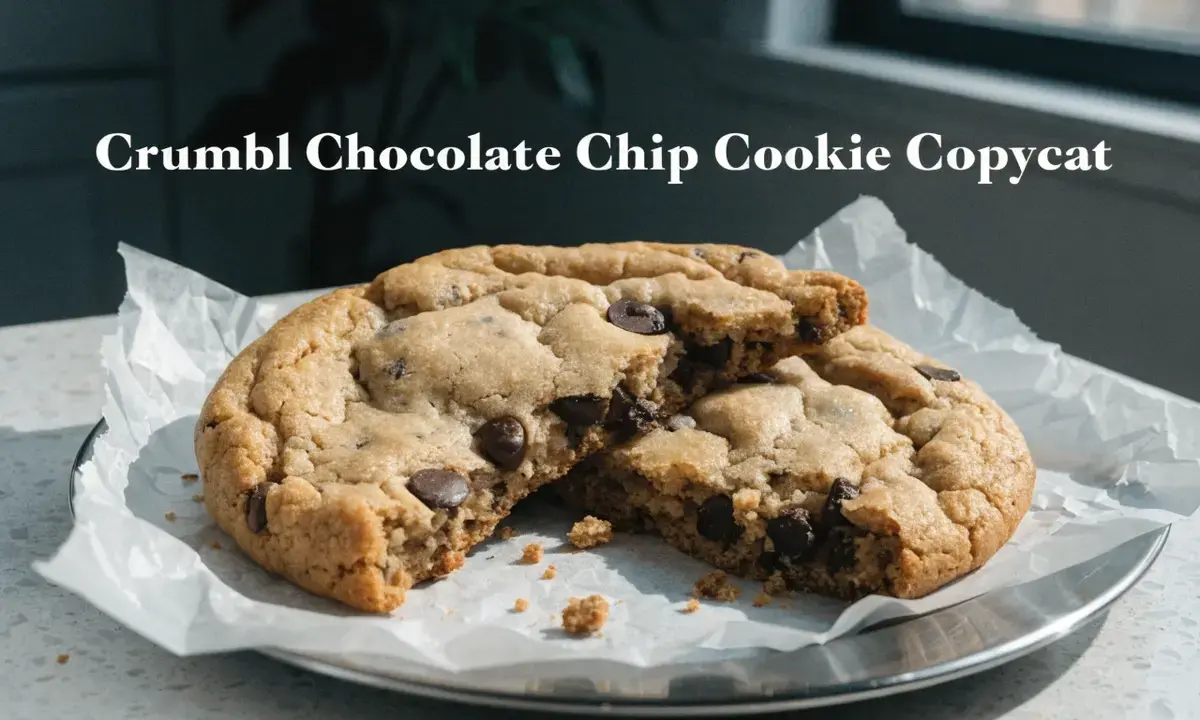
If you’ve ever stood in line at a Crumbl location, you know the hype is real. Their oversized, gooey chocolate chip cookie — made with high-quality ingredients and a buttery, crisp-on-the-outside, soft-on-the-inside texture — has built a cult following across the U.S.
I became obsessed after trying one at a friend’s house. The thick, golden edges, melty chocolate chunks, and perfect sprinkle of sea salt on top had me hooked. But let’s be honest — $4–$5 per cookie adds up fast.
So I set out to recreate it at home. I ran this dough four ways — with and without cornstarch, and with dough balls left smooth versus split and stacked jagged-side-up — to isolate which technique actually mattered. The cornstarch batch held a noticeably softer, more “underbaked” center, and the jagged-stacking batch baked taller and rounder instead of spreading flat. Both made the final cut below.
Ingredients
| Ingredient | Quantity | Notes |
|---|---|---|
| Unsalted butter, softened (not melted) | 1½ cups (340g) | Cold-creamed butter traps air and keeps the dough from spreading thin — see the science note below |
| Granulated sugar | ¾ cup (150g) | For structure and slight crispness |
| Brown sugar, packed | 1½ cups (300g) | Adds depth, chew, and moisture retention |
| Eggs | 2 large, room temperature | |
| Vanilla extract | 1½ tbsp | |
| All-purpose flour | 4¼ cups (510g) | Measure by weight if possible |
| Cornstarch | 1 tbsp | The texture “secret” — see below |
| Baking soda | 2 tsp | |
| Baking powder | 1 tsp | |
| Salt | 1 tsp | |
| Milk chocolate chips | 2¼ cups (380g) | Plus extra for pressing onto tops after baking |
Why Cornstarch Is in the Dry Ingredients
A small amount of cornstarch is a common addition in copycat Crumbl recipes specifically to soften the crumb and give the interior that dense, almost-underbaked “cookie dough” texture Crumbl is known for, without leaving the center actually raw. It works alongside a broader principle of cookie chemistry: King Arthur’s baking team explains that sugar and fat ratios directly govern spread and texture — cornstarch effectively dilutes the flour’s gluten-forming proteins in a small portion of the mix, which is part of why it produces a softer bite than a straight all-purpose-flour dough.
Why Creamed (Not Melted) Butter
This recipe uses softened, creamed butter rather than melted. That’s a deliberate choice: creaming traps air into the fat that helps the cookie hold height, where melted butter releases more water into the dough during mixing, allowing more gluten to develop — which produces a flatter, denser, chewier cookie instead of Crumbl’s thick, tall shape. For a cookie built specifically to stay tall, creamed butter is the better starting point.
8-Step Method
- Cream butter and sugars. In a stand mixer, beat butter, granulated sugar, and brown sugar on medium until light and fluffy, 2–3 minutes.
- Add eggs and vanilla. Beat in eggs one at a time, then vanilla, until fully combined.
- Combine dry ingredients. Whisk flour, cornstarch, baking soda, baking powder, and salt separately.
- Mix. Add dry ingredients to the wet mixture on low speed, mixing just until no streaks remain — overmixing here is the most common cause of tough, dense cookies.
- Fold in chocolate chips. Fold gently with a spatula until evenly distributed.
- Portion and shape. Scoop dough into 4–5 oz balls (a ½ cup scoop). Pull each ball in half, then press the two halves back together with the jagged broken edges facing up. This shaping trick — pulling a dough ball apart and reassembling it jagged-side-up — is a technique multiple copycat recipe developers trace back to an old Cook’s Illustrated method for controlling spread and creating a craggy, bakery-style top, rather than something unique to Crumbl itself.
- Chill. Chill shaped dough balls 15 minutes (up to 24 hours for deeper flavor).
- Bake. Preheat oven to 375°F (190°C). Bake 12–15 minutes until edges are golden and centers are set but still look soft. Press a few extra chocolate chips onto the warm cookies immediately after baking. Cool on the sheet 5–10 minutes before transferring to a wire rack.
Tips & Substitutions
- Use quality chocolate: Guittard or Ghirardelli milk chocolate chips are closest to what Crumbl itself uses.
- Don’t skip the chill: Even 15 minutes firms the butter back up after mixing and noticeably reduces spread.
- Gluten-free swap: A 1:1 gluten-free all-purpose blend works; add ¼ tsp xanthan gum if the blend doesn’t already include it.
- Coconut sugar can replace brown sugar for a less sweet result, though it will slightly change the moisture balance.
Storage
Short-term: Store baked cookies airtight at room temperature for up to 4 days. Reheat 10 seconds in the microwave for that fresh-baked feel.
Long-term: Freeze shaped, unbaked dough balls for up to 3 months — bake straight from frozen, adding 2–3 minutes. Baked cookies also freeze well individually wrapped.
Pro tip: A slice of bread in the storage container releases moisture and helps keep cookies soft longer.
FAQ
Why do you chill the cookie dough?
Chilling lets the flour fully hydrate and firms the fat back up after mixing, which controls spread during baking and deepens flavor.
Can I skip the jagged-edge shaping step?
Yes — the cookies will still taste the same, but they’ll spread into a smoother, flatter shape rather than Crumbl’s signature tall, craggy top.
What makes Crumbl cookies so soft and gooey?
A combination of a high butter-to-flour ratio, cornstarch softening the crumb, and intentionally underbaking the center so it stays soft as the cookie finishes setting outside the oven.
Can I freeze the dough?
Yes — shape into balls (including the jagged-edge step) before freezing, then bake straight from frozen, adding 2–3 minutes to the bake time.
Read Also
- Resources — more baking guides and technique references
- About — more on the recipe testing behind this site
Sources Cited
- King Arthur Baking — Cookie Science: How to Achieve Your Perfect Chocolate Chip Cookie (sugar, fat, and structure)
- The Café Sucre Farine — Copycat Crumbl Chocolate Chip Cookies (jagged-edge shaping technique, attributed to Cook’s Illustrated)