
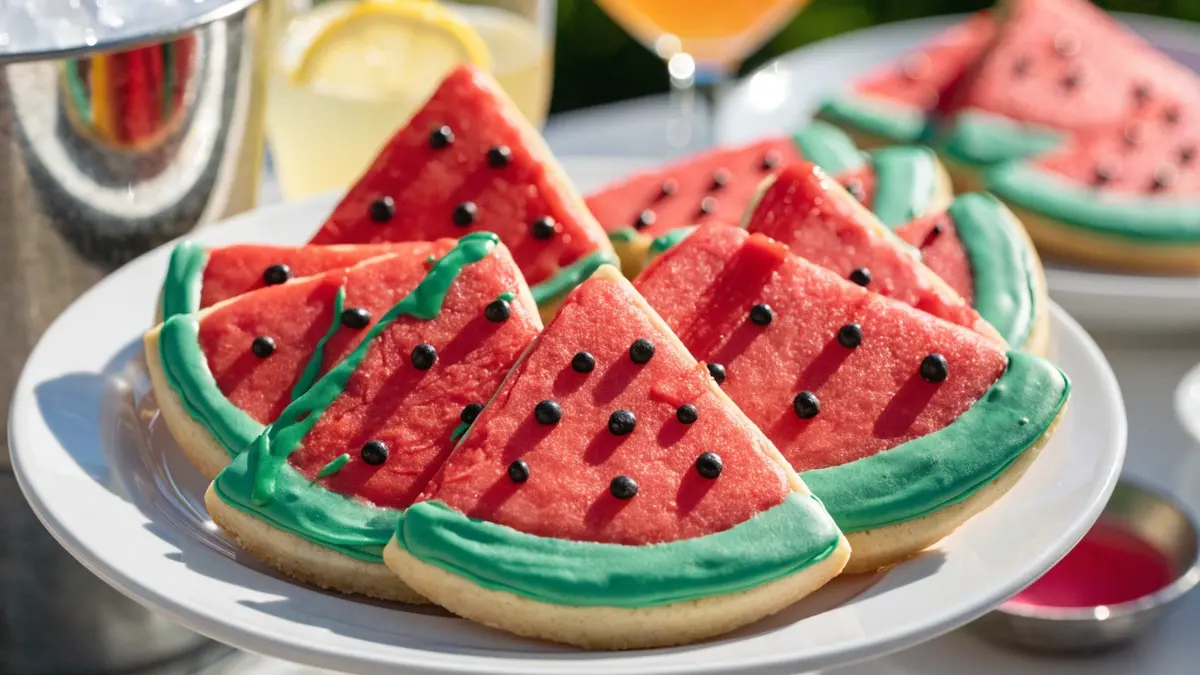
Author’s note: I made a batch with fresh pureed watermelon and a batch with watermelon candy flavoring side by side — the fresh version barely registered as watermelon at all once baked, which sent me looking into why.
Why “Watermelon Flavor” Doesn’t Taste Like Watermelon
This is the flavor where using the real fruit is actually the wrong move, and it’s worth understanding why before you start. Watermelon’s fresh taste comes from a combination of very high water content and delicate, heat-sensitive aromatic compounds — both of which are destroyed by baking. Beyond that, there’s a deeper problem: according to a breakdown from Tasting Table, there isn’t even one single “watermelon flavor” to replicate, since different watermelon varieties contain different flavor compounds — candy and extract makers settle on a simplified, exaggerated approximation rather than any one real watermelon’s actual taste.
That’s why this recipe uses watermelon candy/baking flavoring (a concentrated oil-based flavoring, distinct from a standard extract) rather than fresh puree — it’s not a shortcut, it’s the version that will actually taste like something recognizable once baked.
Full Recipe
Yields: 16 cookies Prep time: 25 minutes (plus 20 minute chill) Bake time: 10–11 minutes
Dough
- 226 g unsalted butter, softened
- 250 g granulated sugar
- 1 large egg
- 1 tsp vanilla extract
- 1/2 tsp watermelon candy/baking flavoring (oil-based, not a standard extract)
- 320 g all-purpose flour
- 1/2 tsp baking powder
- 1/4 tsp fine sea salt
- Pink and green gel food coloring
- Mini chocolate chips, for “seeds”
Glaze (optional, for a shinier finish)
- 120 g powdered sugar
- 2–3 tbsp milk
- Pink gel food coloring
6-Step Method
- Cream and combine. Beat butter and sugar until fluffy, then beat in egg, vanilla, and watermelon flavoring.
- Fold in dry ingredients. Whisk flour, baking powder, and salt, then fold into the wet mixture.
- Split and color. Divide dough roughly 70/30 — tint the larger portion pink, the smaller portion green, kneading gel color in gradually until you reach the shade you want.
- Layer for the watermelon look. Flatten the pink portion into a rough disk, then wrap a thin layer of green dough around the edge (like a rind), and press a few mini chocolate chips into the pink area as “seeds.”
- Chill and slice. Roll the combined dough into a log, chill 20 minutes, then slice into 1/2-inch rounds.
- Bake. 350°F (175°C) for 10–11 minutes until edges are just set. The colors hold much better than a baked-in cinnamon or cocoa color would, since gel food coloring is more heat-stable than the delicate compounds in fresh fruit.
Building the Watermelon Look
The rind-and-seed visual is what sells this cookie more than the flavor alone, since (as covered above) the taste itself is more “candy watermelon” than “fresh fruit.” A thin ring of green dough wrapped around a pink center, with mini chocolate chips pressed in as seeds before baking, gives a clean cross-section when sliced — thinner rings of green read more convincingly as rind than a thick border does.
Troubleshooting
| Problem | Likely Cause | Fix |
|---|---|---|
| Watermelon flavor is barely noticeable | Used standard extract instead of concentrated oil-based flavoring | Oil-based candy flavorings are significantly more concentrated; standard extract may be too weak at the same measured amount |
| Green and pink dough blurred together | Colors combined before fully chilled | Chill the assembled log fully before slicing for cleaner rings |
| Chocolate chip “seeds” sank into the dough | Pressed in too early, before dough firmed up | Press seeds in just before baking, after chilling |
| Cookies spread into an oval instead of round | Sliced too thick or dough too warm | Keep slices under 1/2 inch and work with cold dough |
Storage
| Method | Time | Notes |
|---|---|---|
| Room temperature, airtight | 1 week | Colors hold well since they’re not fresh-fruit based |
| Frozen dough log, unsliced | 3 months | Slice from frozen, adding 1 minute to bake time |
| Frozen baked cookies | 2 months |
FAQ
Can I use fresh watermelon puree instead of flavoring?
You can, but expect a very faint result — watermelon’s fresh flavor compounds are largely lost to heat during baking, which is why this recipe relies on a concentrated flavoring instead.
Is watermelon candy flavoring the same as watermelon extract?
Not quite — candy/baking flavorings (often oil-based) are typically far more concentrated than a standard alcohol-based extract, so measure carefully and start with less if substituting one for the other.
Can I skip the food coloring?
Yes, though the cookies will look like plain sugar cookies rather than reading visually as “watermelon” — the color is doing most of the identification work here.
Can I make a single-color version instead of the layered rind look?
Yes — just tint the whole batch pink and skip the green layer; it’ll taste the same, just without the visual watermelon effect.
Read Also
- 4th of July Cookie Ideas: Red, White, and Blue Treats — related summer coloring techniques
- Seasonal Cookie Flavors: A Year-Round Baking Guide — pillar page
Sources Cited
- Tasting Table — Why ‘Watermelon Flavor’ Is Nothing Like Real Watermelon (flavor compound science)
Leave a Reply