
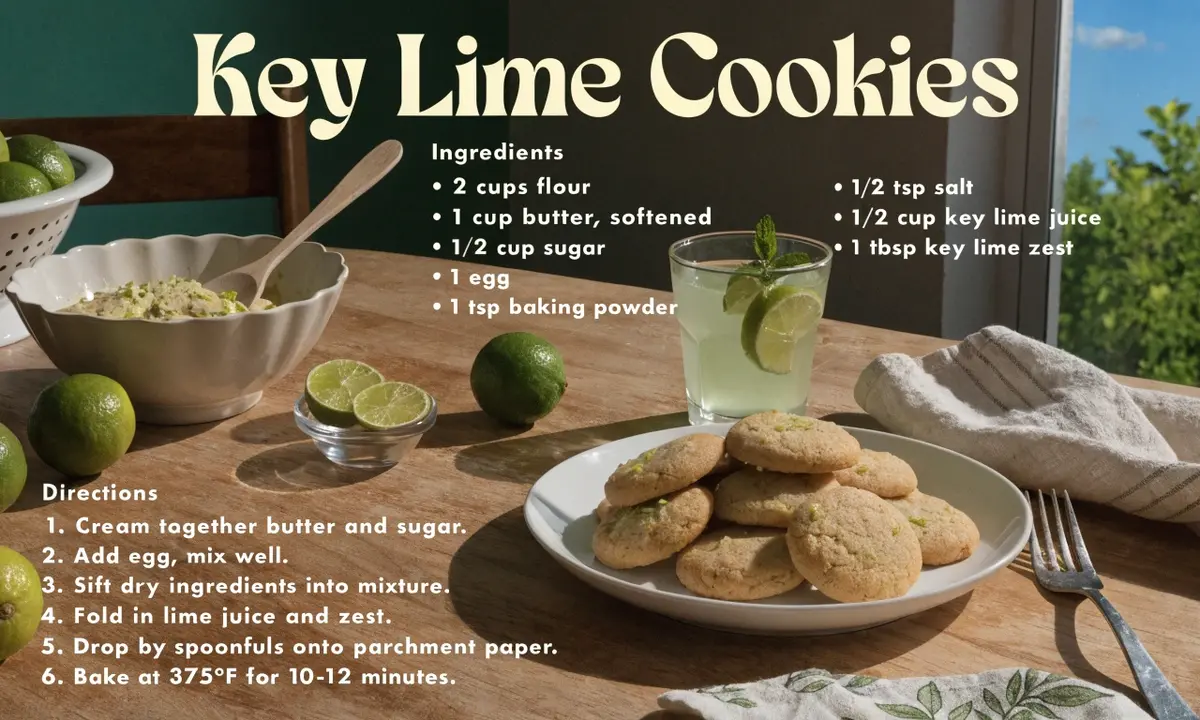
Author’s note: I juiced a full bag of fresh key limes for one test batch just to see if it was worth the effort compared to bottled — twenty-two limes for barely over half a cup of juice. For a cookie glaze, I don’t think it’s worth repeating.
Key Lime vs. Regular Lime: What Actually Changes
Key limes and regular (Persian) limes get used almost interchangeably in casual conversation, but they’re genuinely different fruits, and the practical gap matters more than the flavor gap for a home baker. America’s Test Kitchen ran both a blind taste test and a lab pH test and found that Key lime juice actually tasted less tart than Persian lime juice, with lab testing confirming the lower acidity — the opposite of what most people assume about the “intense” key lime flavor.
The bigger issue is juice yield: a single key lime produces only about a tablespoon of juice or less, meaning it takes roughly twenty key limes to get the same half cup of juice that three or four regular limes would provide. For a cookie recipe that needs a modest amount of juice for glaze and flavor, this recipe uses bottled key lime juice, which most sources agree is a legitimate substitute for the juice itself — the graham cracker and cream cheese elements do most of the flavor work anyway.
Full Recipe
Yields: 12 cookies Prep time: 25 minutes (plus 20 minute chill) Bake time: 11–13 minutes
Dough
- 226 g unsalted butter, softened
- 200 g granulated sugar
- 1 large egg
- 1 tbsp key lime zest (regular lime zest works if key lime isn’t available)
- 1 tbsp key lime juice (bottled is fine)
- 300 g all-purpose flour
- 60 g graham cracker crumbs
- 1/2 tsp baking soda
- 1/4 tsp fine sea salt
Key Lime Glaze
- 120 g powdered sugar
- 2–3 tbsp key lime juice
- Pinch of salt
- Extra graham crumbs, for topping
6-Step Method
- Cream and combine. Beat butter and sugar until fluffy, then beat in egg, zest, and juice.
- Fold in dry ingredients. Whisk flour, graham cracker crumbs, baking soda, and salt separately, then fold into the wet mixture.
- Chill. Chill dough 20 minutes — the graham crumbs add texture but also a bit of extra absorbency, so a short chill firms things up nicely.
- Portion and bake. Scoop 90 g dough balls, bake at 350°F (175°C) for 11–13 minutes.
- Cool completely.
- Glaze and finish. Whisk glaze ingredients together, drizzle over cooled cookies, and finish with a light dusting of extra graham crumbs while the glaze is still wet.
Fresh Key Limes: When They’re Worth It
If you do have access to fresh key limes — they’re in season in the U.S. roughly June through September — using fresh zest specifically (rather than juice) gives a noticeably more aromatic result than bottled juice alone, since zest carries the fragrant oil that bottled juice doesn’t. A practical middle ground: zest fresh key limes or regular limes for the dough, and use bottled key lime juice for the glaze, which is where the effort-to-payoff ratio of fresh juicing is lowest.
Troubleshooting
| Problem | Likely Cause | Fix |
|---|---|---|
| Cookies taste more “graham” than “lime” | Not enough zest or juice relative to the crumbs | Increase zest to 1.5 tbsp, or add 1/2 tsp lime extract |
| Glaze too thin, runs off the cookie | Too much juice added at once | Add juice a teaspoon at a time until it coats a spoon |
| Dough feels gritty | Graham crumbs too coarse | Pulse crumbs finer in a food processor before mixing in |
| Cookies spread too much | Dough not chilled | Chill a full 20 minutes before baking |
Storage
| Method | Time | Notes |
|---|---|---|
| Glazed, airtight | 5 days | Room temperature |
| Unglazed | 1 week | Glaze just before serving for best appearance |
| Frozen dough | 3 months | Bake from frozen, add 1–2 minutes |
| Frozen baked, unglazed | 2 months | Glaze after thawing |
FAQ
Is bottled key lime juice actually different from bottled regular lime juice?
Yes — true bottled key lime juice is made specifically from key limes and has a distinct flavor from regular bottled lime juice; check the label, since some products labeled generically as “lime juice” are Persian lime.
Can I use only regular limes and skip key lime entirely?
Yes, regular lime works fine as a substitute in both zest and juice — expect a slightly more straightforwardly tart flavor rather than key lime’s more floral, aromatic quality.
Why include graham crumbs in the cookie dough itself, not just as a topping?
It’s a nod to key lime pie’s crust, worked directly into the dough for texture and flavor throughout the cookie rather than just on top.
How is this different from the lemon cookie recipes?
The lemon cookie recipes use lemon curd or poppy seed for a brighter, more classically “bakery” flavor; this recipe leans into the graham-cracker-and-lime combination specifically associated with key lime pie, giving it a more dessert-inspired identity.
Read Also
- Lemon Cookie Recipes for Spring and Summer — citrus cookie comparison
- Seasonal Cookie Flavors: A Year-Round Baking Guide — pillar page
Sources Cited
- America’s Test Kitchen — Key Limes vs. Persian Limes (blind taste test and lab pH comparison)
- ScienceInsights — What Is the Difference Between Key Lime and Lime? (juice yield comparison)
Leave a Reply