
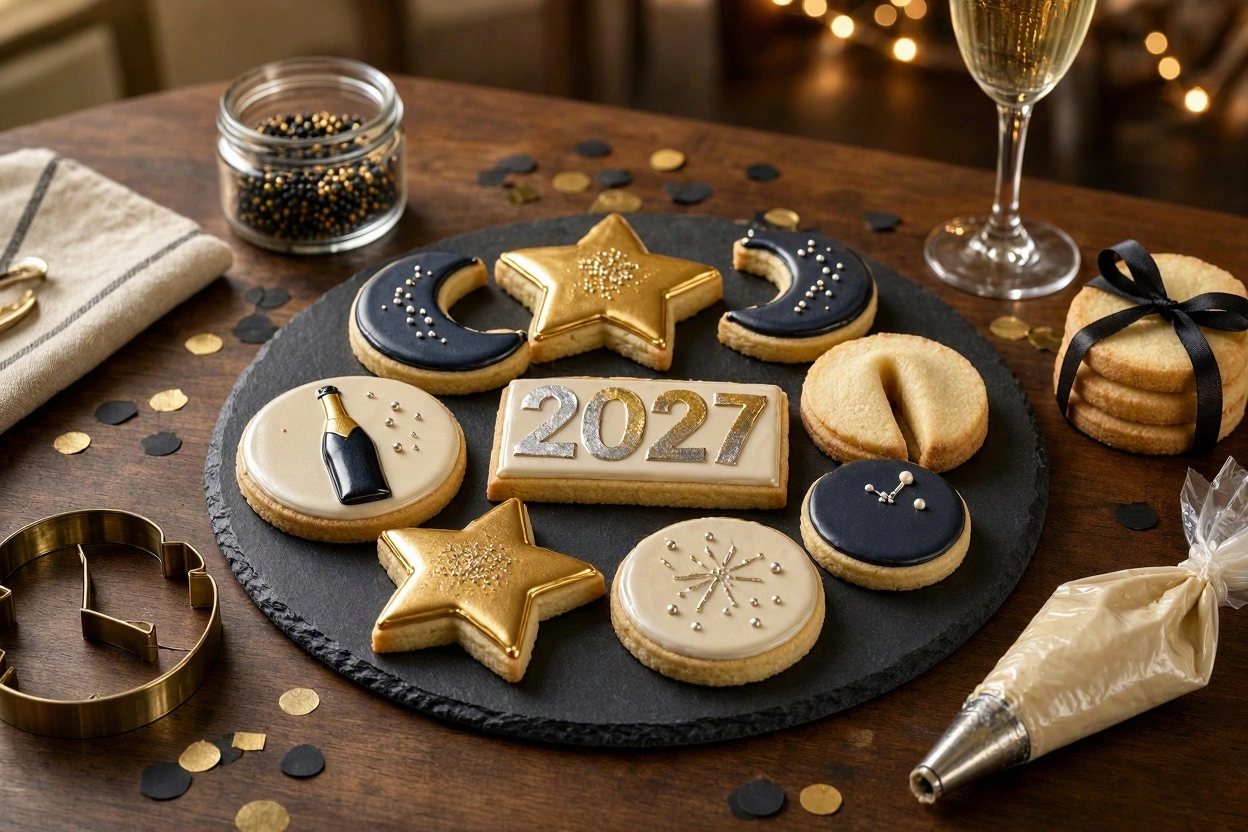
Every holiday cookie tray has its stars, but New Year’s Eve is the one night when the cookies are expected to sparkle. There’s no single traditional flavor like gingerbread at Christmas or pumpkin spice in the fall — which is exactly what makes New Year’s Eve cookies so fun. The theme is celebration: champagne, gold, glitter, midnight chocolate, and anything that feels a little more festive than an ordinary Tuesday.
In this guide you’ll find five New Year’s Eve cookie ideas, a full recipe for our thick, soft Champagne Sparkle Cookies, decorating tips for the gold-and-black party look, and a make-ahead timeline so you’re not baking at 11:45 p.m. This article is part of our Seasonal Cookie Flavors: A Year-Round Baking Guide, where you’ll find every holiday and season in one place.
💡 Quick take: New Year’s Eve cookies rely more on color and finish than on one signature flavor. A simple vanilla or sugar cookie base becomes unmistakably “New Year’s” with a champagne-flavored frosting, edible gold, and a few stars — the same principle we cover in our flavor pairing section: color signals the occasion even when the flavor doesn’t strictly require it.
Why Champagne Flavor Works in Cookies
Champagne is dry, bright, and lightly acidic, with a faint fruity-toasty note. In baking, that profile behaves a lot like the “bright acid + light texture” pairing used in spring and summer cookies: it keeps a sweet, buttery cookie from tasting heavy. That’s why champagne works best in the frosting and as a background note in the dough, rather than as the main liquid.
There are three practical ways to get champagne flavor into a cookie:
- Reduced champagne. Simmering champagne until it’s a quarter of its original volume concentrates the flavor and removes most of the water, so it won’t make the dough wet or cakey.
- Champagne extract. A small amount of extract adds aroma without extra liquid. Use it alongside vanilla, not instead of it.
- Alcohol-free alternatives. Sparkling white grape juice or sparkling apple cider, reduced the same way, gives a similar fruity-sweet note for kids and guests who don’t drink.
One honest note on alcohol: baking and simmering reduce it, but they don’t guarantee it all disappears. If you’re serving children, or guests who avoid alcohol entirely, use the alcohol-free version and say so on the label.
5 New Year’s Eve Cookie Ideas
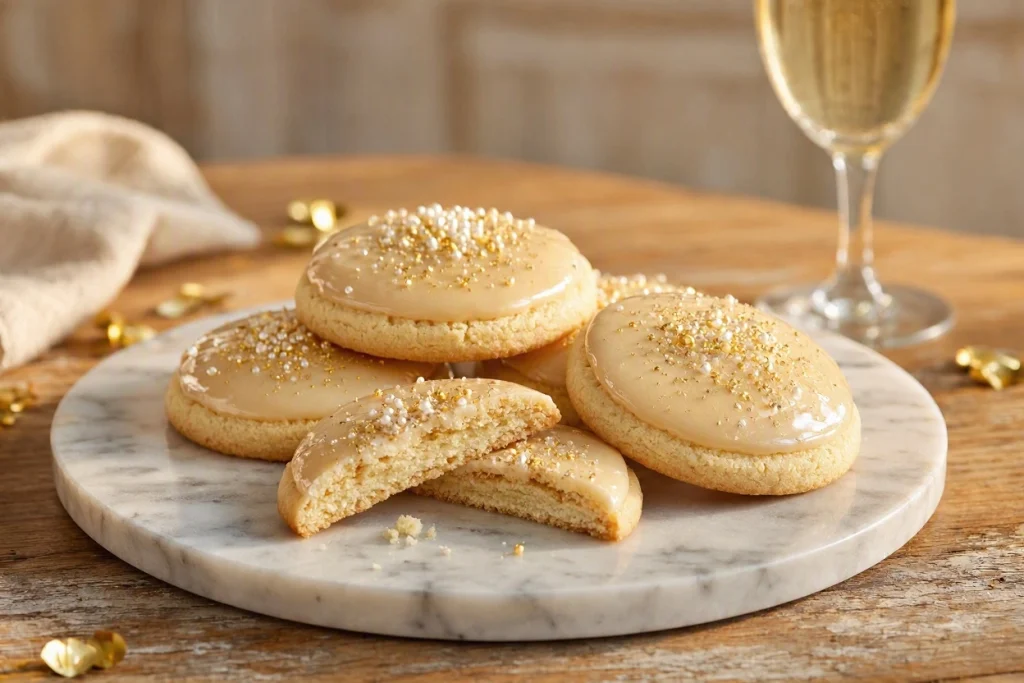
1. Champagne Sparkle Cookies
The headline flavor of the night: a thick, soft vanilla-champagne cookie topped with champagne buttercream and sparkling sugar. Full recipe below.
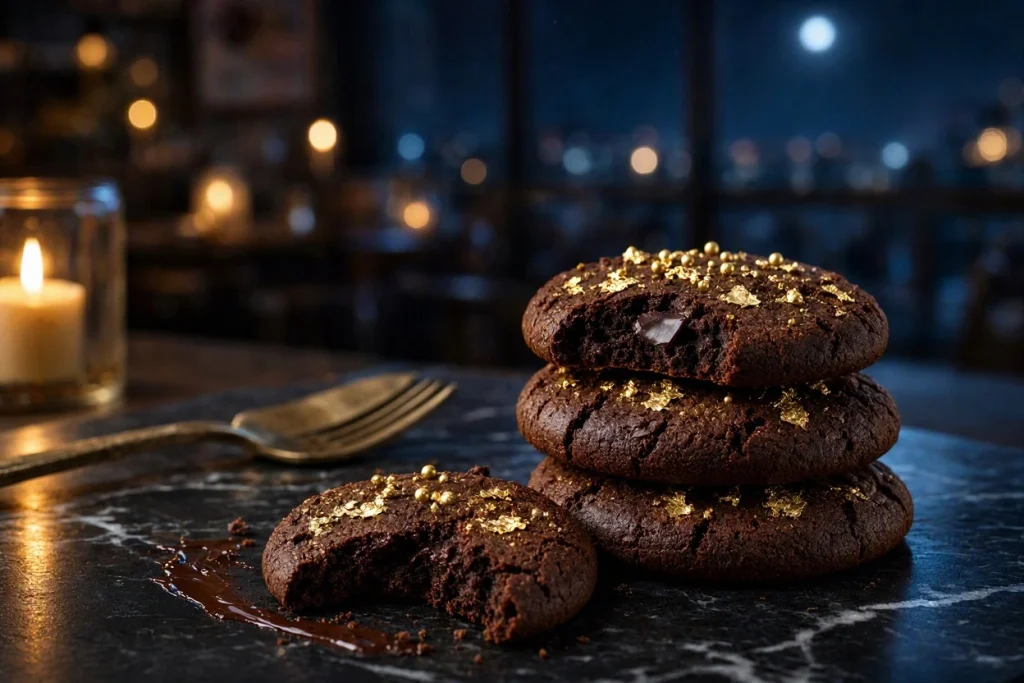
2. Midnight Chocolate Gold Cookies
A deep, fudgy chocolate cookie finished with a thin chocolate ganache and a dusting of edible gold luster dust. The dark base makes the gold look dramatic, and chocolate is a safe crowd-pleaser for a mixed party.
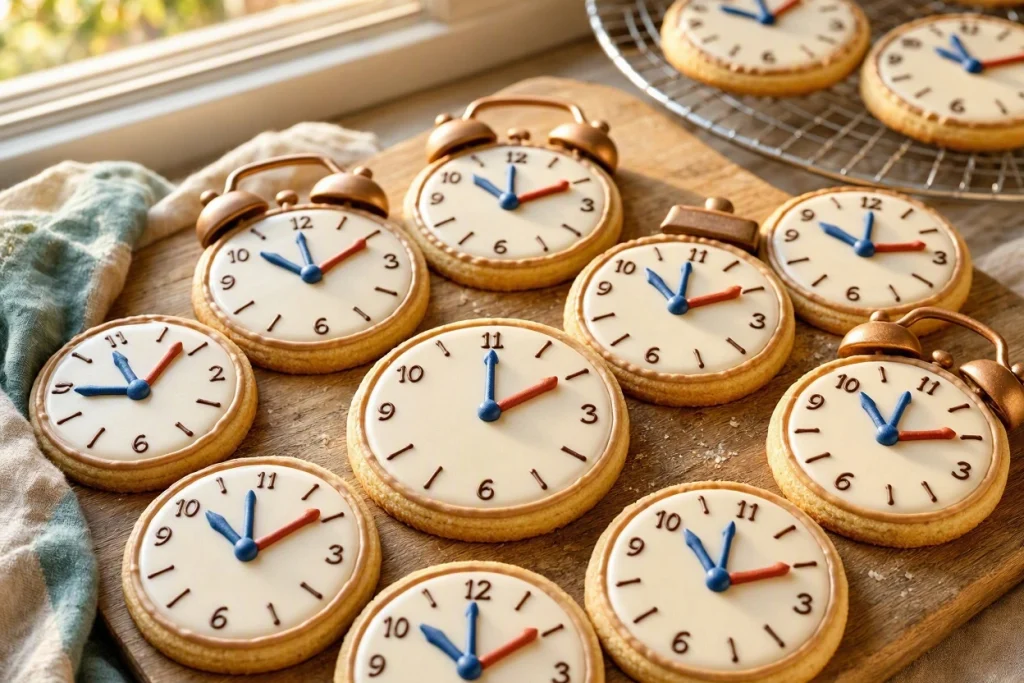
3. Countdown Clock Sugar Cookies
Round cut-out sugar cookies decorated with royal icing as clock faces, with the hands set to 12:00. These are the decorating-focused option — use the sturdy dough from our sugar cookie recipe for decorating so the circles hold their shape.
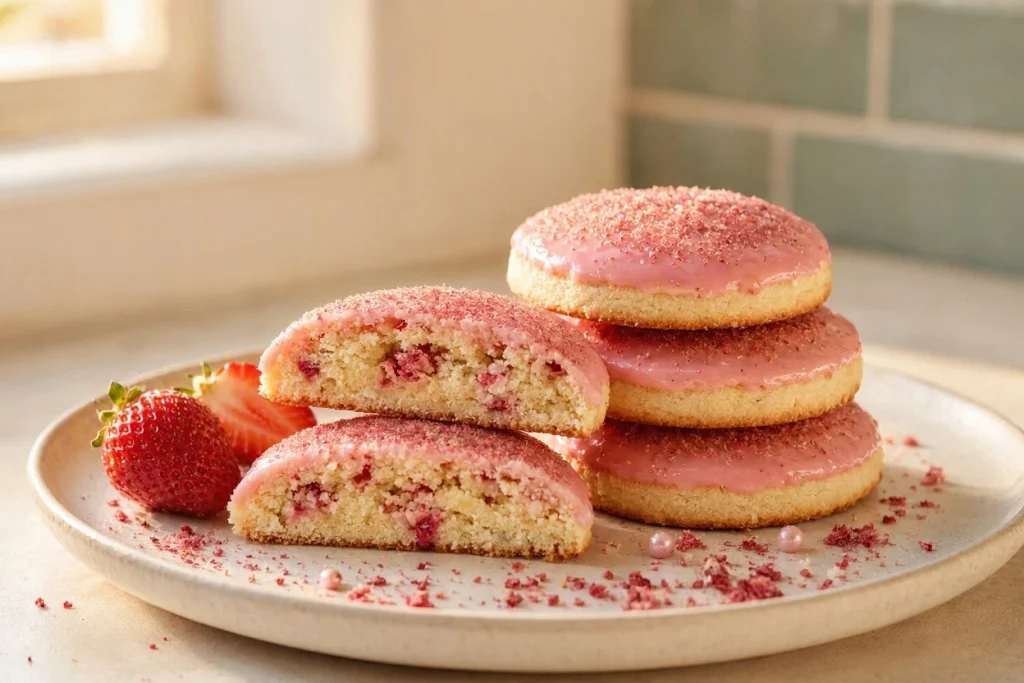
4. Pink Champagne Strawberry Cookies
Add freeze-dried strawberry powder to the champagne buttercream for a pink, rosé-style frosting. The powder adds flavor and color without the extra moisture of fresh fruit, which is the same trick we use in our strawberry shortcake cookies.
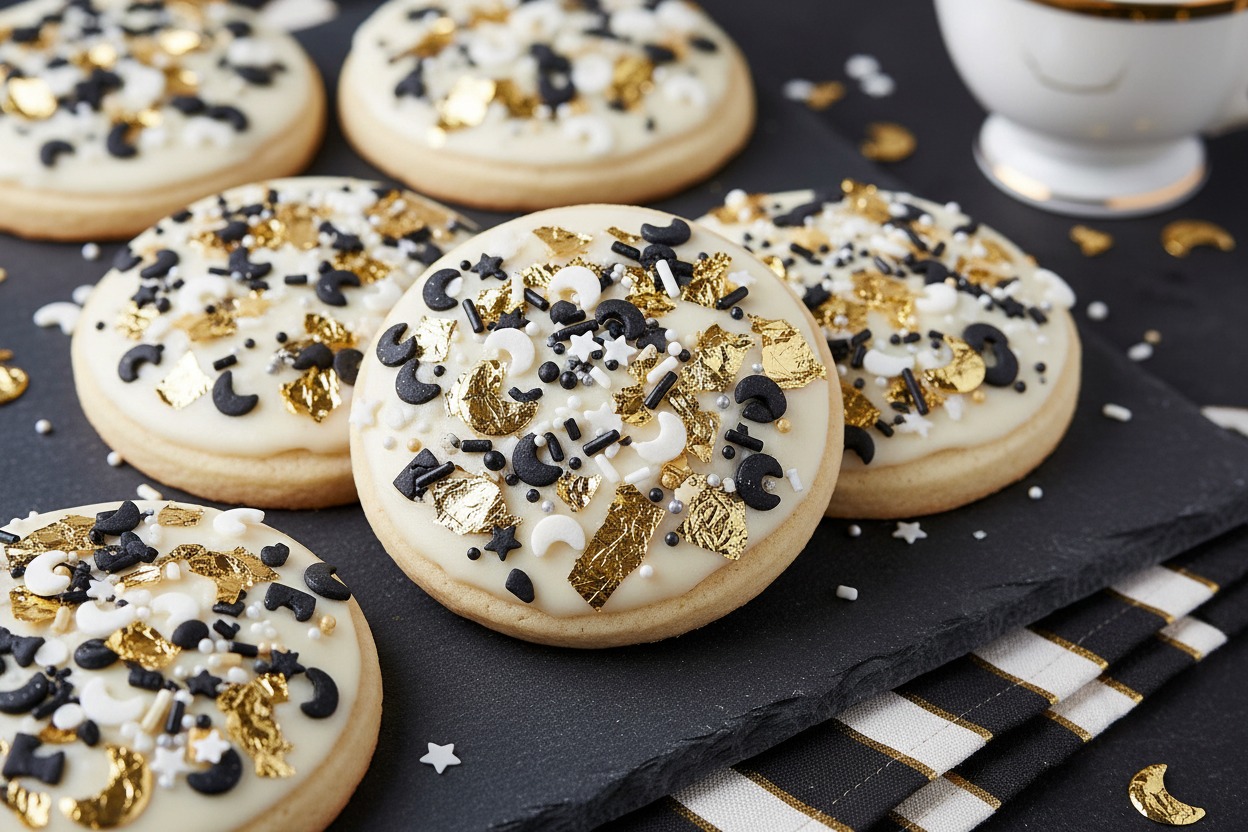
5. Black, White & Gold Confetti Cookies
A simple vanilla cookie base rolled in gold and white sprinkles before baking, then drizzled with dark chocolate. It’s the easiest option on the list and looks great on a party platter.
Champagne Sparkle Cookies (Crumbl-Style)
This recipe uses a bakery-style, thick-cookie approach: a chilled dough, a large 4 oz portion, and a slightly underbaked center so the cookie stays soft for hours.
Yield: 10 large cookies Prep time: 25 minutes (plus 30 minutes chilling and 15 minutes to reduce the champagne) Bake time: 10–12 minutes
Ingredients
Reduced champagne
- 1 cup (240 ml) champagne, prosecco, or sparkling white grape juice
Cookies
- 2½ cups (315 g) all-purpose flour
- 2 tablespoons (16 g) cornstarch
- ½ teaspoon baking soda
- ½ teaspoon baking powder
- ½ teaspoon fine salt
- ¾ cup (170 g) unsalted butter, softened
- ¾ cup (150 g) granulated sugar
- 1 large egg plus 1 egg yolk, at room temperature
- 2 teaspoons vanilla extract
- 1 teaspoon champagne extract (optional)
- 2 tablespoons reduced champagne, cooled
Champagne buttercream
- ½ cup (113 g) unsalted butter, softened
- 3 cups (360 g) powdered sugar
- 2 tablespoons reduced champagne, cooled
- 1 tablespoon heavy cream, plus more as needed
- ½ teaspoon vanilla extract
- ¼ teaspoon fine salt
To decorate
- Sparkling sugar or gold sanding sugar
- Edible gold stars or gold luster dust
Instructions
- Reduce the champagne. Simmer the champagne in a small saucepan over medium heat, 10–15 minutes, until it has reduced to about ¼ cup (60 ml). Pour into a heatproof dish and cool completely. You’ll use 2 tablespoons in the dough and 2 tablespoons in the frosting.
- Mix the dry ingredients. Whisk the flour, cornstarch, baking soda, baking powder, and salt in a medium bowl.
- Cream the butter and sugar. Beat the butter and granulated sugar for 2–3 minutes until pale and fluffy. Beat in the egg, egg yolk, vanilla, champagne extract (if using), and 2 tablespoons of the cooled reduced champagne.
- Combine. Add the dry ingredients and mix on low until just combined. Overmixing makes cookies tough.
- Chill. Cover the dough and refrigerate for 30 minutes. This keeps the cookies thick.
- Portion and shape. Preheat the oven to 350°F (175°C) and line two baking sheets with parchment. Divide the dough into 10 portions of about 4 oz (110 g) each, roll into balls, and place 3–4 inches apart. Gently press the tops down just slightly.
- Bake. Bake 10–12 minutes, until the edges are set and the centers still look soft and barely done. Cool on the pan for 10 minutes, then move to a wire rack. Cool completely before frosting.
- Make the frosting. Beat the butter until creamy. Add the powdered sugar, salt, vanilla, the remaining 2 tablespoons of reduced champagne, and the cream. Beat on medium-high for 2–3 minutes until light and spreadable, adding more cream a teaspoon at a time if needed.
- Decorate. Swirl or pipe the frosting on each cookie, then finish immediately with sparkling sugar and gold stars so they stick.
Tips for the Best Results
- Don’t skip the reduction. Adding unreduced champagne makes the dough wetter and the cookie cakier, with very little flavor payoff.
- Pull them early. The cookies firm up as they cool. If the centers look fully set in the oven, they’ll be dry by party time.
- Frost only when fully cooled. Warm cookies melt buttercream into a glaze.
- Add gold last. Luster dust and sugar need a fresh, slightly tacky frosting surface.
Decorating for the New Year’s Eve Look
The visual identity of New Year’s Eve is simple, which makes it forgiving for beginners:
- Palette: gold, black, white, and silver — optionally with blush pink for a champagne-rosé effect.
- Shapes: stars, circles (clock faces and ornaments), and champagne-flute cut-outs.
- Finishes: sanding sugar for sparkle, luster dust for a metallic sheen, and gold star sprinkles for accents.
- Presentation: a black or white platter makes gold decorations stand out. Group cookies in odd numbers and stack a few for height.
Make-Ahead Timeline for a Stress-Free Party
The best New Year’s Eve cookies are baked before the evening gets busy.
- 1–2 weeks ahead: Make the cookie dough, portion it into balls, and freeze. Dough balls can go straight from the freezer into the oven with an extra minute or two of baking time.
- 2–3 days ahead: Bake the cookies and store them unfrosted in an airtight container.
- Day before: Make the buttercream and refrigerate it; bring it to room temperature and re-whip before using.
- Day of: Frost and decorate a few hours before guests arrive. Store frosted cookies in a single layer in a cool spot.
Buttercream-frosted cookies keep best covered in the refrigerator if they’ll sit for more than a day, then come back to room temperature before serving for the best texture.
Expert Resources on New Year’s Eve Cookies
- Sugar & Soul — Champagne Sugar Cookies — A lighter, fluffier take on champagne cookies with a champagne buttercream, and notes on frosting variations.
- Cake Whiz — Champagne Cookies with Champagne Frosting — A small-batch, no-chill approach that also covers where to find champagne extract.
- Tasty — New Year’s Eve Champagne Cookies — A filled-and-dipped version that uses reduced champagne in a ganache, with edible gold dust on top.
- Food Network Kitchen — New Year’s Resolution Cookies — Champagne-flute sugar cookies with a fun, interactive twist for parties.
Frequently Asked Questions
What cookies are best for New Year’s Eve?
Champagne cookies, gold-dusted chocolate cookies, and decorated sugar cookies are the most popular choices. The common thread is a festive finish — metallic accents, sparkling sugar, and a black-white-gold color palette — rather than one traditional flavor.
Can I make champagne cookies without alcohol?
Yes. Use sparkling white grape juice or sparkling apple cider, reduced on the stove the same way, and add champagne extract for aroma. The flavor is slightly fruitier but works beautifully in both the dough and the frosting.
Does the alcohol bake out of champagne cookies?
Not completely. Simmering the champagne first and baking the cookies both reduce alcohol, but some can remain. For children or guests who avoid alcohol, choose the alcohol-free version.
How do I get gold decorations to stick?
Apply sanding sugar, sprinkles, or luster dust while the frosting is still fresh and slightly tacky. For a more intense metallic finish, brush luster dust mixed with a few drops of clear alcohol-free extract onto dry royal icing.
How far ahead can I make New Year’s Eve cookies?
Cookie dough balls freeze well for a week or two (or longer), and baked, unfrosted cookies keep for 2–3 days in an airtight container. Frost within a few hours of serving for the best look and texture.
What other holiday cookies pair well with a New Year’s Eve tray?
Cookies with the same sparkle-and-color approach, like Valentine’s Day cookies, work well, and leftover Christmas cookie flavors like peppermint or gingerbread round out a holiday-week tray.
Continue Exploring Seasonal Cookie Flavors
New Year’s Eve closes out the calendar, but the baking year starts right over again. Head back to our Seasonal Cookie Flavors pillar page to plan your next batch, or browse more of our Christmas cookie recipes to bake ahead for the holiday season.
Leave a Reply