
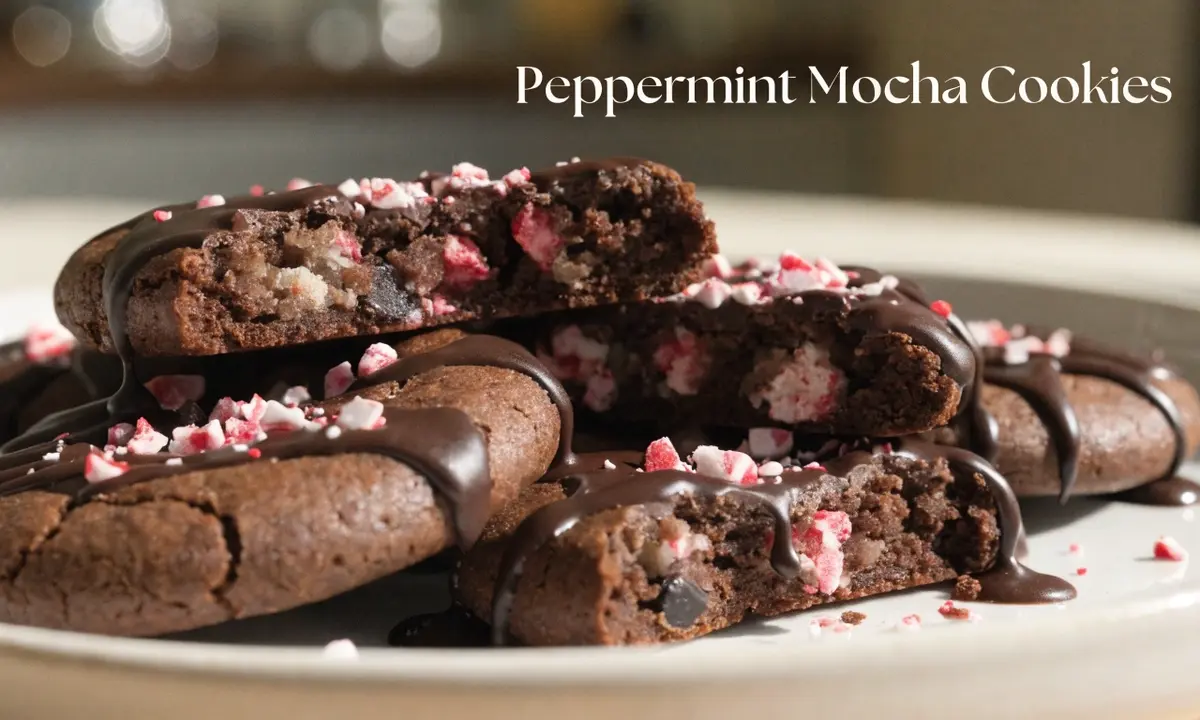
The peppermint mocha arrives in coffee shops every November and immediately signals that the holiday season has officially started. The combination is deceptively simple — chocolate, espresso, and mint — but the balance between the three is everything. Too much mint and it tastes like toothpaste. Too little and the peppermint disappears behind the chocolate. Too much espresso and the bitterness overwhelms. Get the balance right and you have a cookie that tastes like December in the best possible way.
This recipe produces a thick, fudgy dark chocolate espresso cookie — large-format, Crumbl-style — with a peppermint buttercream frosting and crushed candy cane garnish. The chocolate base is built for depth rather than sweetness, using both Dutch-process cocoa and melted dark chocolate. The espresso amplifies the chocolate without reading as “coffee-flavored.” The peppermint is clean, cool, and precisely dosed.
According to Serious Eats’ chocolate cookie testing, the combination of cocoa powder and melted chocolate in a single cookie recipe produces a more complex, layered chocolate flavor than either ingredient alone — cocoa provides bitterness and intensity while melted chocolate adds fat, richness, and snap. This article applies that principle to a holiday format. This recipe is part of our seasonal cookie flavors guide and connects to our 10 gourmet Christmas cookie flavors overview.
The three-flavor balance rule
Chocolate is the base — it should be the dominant flavor. Espresso is the amplifier — it deepens and rounds the chocolate without being identifiable as coffee on its own. Peppermint is the accent — it should arrive as a cool, clean finish rather than a primary flavor. If your peppermint is louder than your chocolate, you have lost the balance.
The Recipe
Ingredients — Makes 10–12 large cookies
Cookie dough
- 170g (¾ cup / 1½ sticks) unsalted butter, softened
- 200g (1 cup) granulated sugar
- 100g (½ cup) dark brown sugar, packed
- 2 large eggs, room temperature
- 1 tsp pure vanilla extract
- 113g (4 oz) dark chocolate (70%), melted and cooled
- 60g (¾ cup) Dutch-process cocoa powder, sifted
- 2 tsp instant espresso powder
- 300g (2½ cups) all-purpose flour
- 1 tsp baking soda
- ½ tsp baking powder
- ¾ tsp fine sea salt
- 120g (¾ cup) dark chocolate chips or chunks
Peppermint buttercream
- 225g (1 cup / 2 sticks) unsalted butter, room temp
- 480g (4 cups) powdered sugar, sifted
- 3–4 tbsp heavy cream
- ¼ tsp pure peppermint extract — start here, taste before adding more
- Pinch of fine sea salt
- Optional: 1–2 drops white gel food coloring for a cleaner white
Garnish
- 3–4 candy canes, crushed (add just before serving)
- Dark chocolate drizzle (optional)
- Flaky sea salt
Method
1
Melt and cool the chocolate
Chop the dark chocolate bar into small pieces and melt in a heatproof bowl set over a saucepan of barely simmering water (bain-marie method), stirring occasionally. Alternatively, microwave in 30-second bursts, stirring between each, until just melted. Stir in the espresso powder while the chocolate is still warm — it dissolves more completely in warm chocolate than in cold. Set aside to cool to room temperature, about 20 minutes. Do not add warm chocolate to creamed butter; it will melt the butter and break the emulsion.
2
Cream butter and sugars
Beat softened butter with both sugars on medium-high speed for 3–4 minutes until pale, light, and significantly increased in volume. Scrape the bowl halfway through. The mixture should look fluffy and almost mousse-like. Under-creaming at this stage produces a denser, flatter cookie — the air incorporated here is the primary leavening for this recipe.
3
Add eggs, vanilla, and chocolate
Add eggs one at a time, beating 30 seconds between each and scraping the bowl. Add vanilla and mix briefly. Pour in the cooled melted chocolate and beat on low until fully incorporated, about 30 seconds. The dough will look dark and glossy at this stage.
4
Add dry ingredients and chocolate chips
Whisk together flour, cocoa powder, baking soda, baking powder, and salt in a separate bowl. Add to the chocolate dough all at once and mix on low until just combined — stop the moment no dry streaks remain. Fold in the chocolate chips by hand with a spatula. Do not overmix; the dough is already stiff and further mixing develops gluten that makes the cookie tough.
5
Chill — minimum 1 hour, ideally 2–4 hours
Cover the bowl and refrigerate for at least 1 hour. The high chocolate content means this dough softens quickly at room temperature during baking — chilling is critical for height retention. The dough will firm significantly in the fridge and become much easier to scoop. Unlike gingerbread, this dough does not dramatically improve in flavor beyond 4 hours of chilling, so an overnight rest is convenient but not essential.
6
Preheat, scoop, and press
Preheat oven to 350°F / 175°C — confirm with an oven thermometer. Line baking sheets with parchment. Using a #16 disher scoop, portion dough into balls (approximately 65g each). Place 6 per half-sheet pan with generous spacing. Press each ball into a disc about 2cm thick with the flat bottom of a glass. Re-chill shaped dough balls on the pan for 10 minutes before baking if the dough has softened during scooping.
7
Bake
Bake 11–13 minutes. Dark chocolate cookies are harder to judge visually than lighter doughs — the color change during baking is subtle. Look for the edges to look set and slightly firm and the surface to have a matte (not wet) appearance. The center may look underdone — that is correct. Rest on the hot pan 10 minutes before transferring to a wire rack to cool completely before frosting. Chocolate cookies firm up significantly as they cool.
8
Make peppermint buttercream and finish
Beat butter on medium-high for 3 minutes until very pale and fluffy. Add sifted powdered sugar in two additions, beating on low between each. Add 3 tablespoons of heavy cream and beat on medium-high for 2 minutes until light and smooth. Add peppermint extract starting at ¼ teaspoon — taste, then add more in ⅛ teaspoon increments if needed. Add salt and optional white gel food coloring. Pipe with a 1M star tip or spread with an offset spatula. Garnish with crushed candy cane immediately before serving — candy cane dissolves into frosting within a few hours if applied too early.
The Peppermint Extract Question: Pure vs. Mint vs. Imitation
This is the single most important ingredient decision in this recipe. There are three types of mint-flavored extracts commonly sold in grocery stores, and they produce very different results:
Pure Peppermint ExtractUSE THIS
Made from peppermint oil — bright, clean, and clearly associated with candy cane flavor. This is the correct choice for holiday baking. The flavor is cool and crisp without veering into spearmint’s earthier register. Start with ¼ tsp per batch; it is potent.
Mint Extract (mixed)USE WITH CAUTION
A blend of peppermint and spearmint oils. The spearmint component adds an earthier, slightly herbal note that reads as “generic mint” rather than “candy cane.” Acceptable if pure peppermint isn’t available, but the flavor is less clean and less clearly holiday-associated.
Imitation Peppermint ExtractAVOID
Made from synthetic menthol compounds rather than actual peppermint oil. The flavor has a sharper, more chemical edge and is harder to balance — a small amount over the ideal quantity produces a result that tastes artificial. The price difference between imitation and pure is minimal; always use pure.
Exact peppermint dosing for the frosting
Start at ¼ tsp (1.25ml) for the entire batch of frosting. Taste. If you want more, add ⅛ tsp at a time and taste again after each addition. The correct level is where peppermint is clearly present but the butter and sugar still read first. Most batches land between ¼ and ⅜ tsp. Going to ½ tsp often pushes it over the line into toothpaste territory. Err on the side of less — you can add more, but you cannot remove it.
Why Dutch-Process Cocoa Matters Here
Not all cocoa powders are equivalent. Natural cocoa (the standard in American grocery stores) is acidic, with a bright, slightly fruity chocolate flavor. Dutch-process cocoa has been treated with an alkali to neutralize the acid, producing a darker color, a smoother, less sharp flavor, and a more deeply chocolatey taste without the acidity.
For this recipe, Dutch-process is the correct choice because the frosting is white and the visual contrast between the dark cookie and light frosting is a key part of the presentation. Dutch-process cocoa produces a significantly darker cookie than natural cocoa — closer to black than brown — which makes the color contrast with the white peppermint frosting and candy cane garnish dramatically more striking. King Arthur Baking’s cocoa comparison shows side-by-side images of the two cocoa types in baked goods — the difference in color and flavor depth is significant.
One important note: Dutch-process cocoa cannot be directly substituted for natural cocoa in recipes that use baking soda as the primary leavener, because the alkaline cocoa reduces the acid needed to activate the soda. This recipe uses a combination of baking soda and baking powder specifically to accommodate Dutch-process cocoa — do not make substitutions to the leavening without adjusting the cocoa type accordingly.
What the Espresso Powder Actually Does
At 2 teaspoons, the espresso powder in this recipe does not produce a coffee-flavored cookie. It functions as a flavor enhancer — coffee’s bitter, roasted compounds amplify and deepen chocolate flavor in a way that is well-documented in pastry science. The Kitchn’s explanation of coffee-chocolate pairing notes that the roasted aromatic compounds in coffee share chemical similarities with those in chocolate, making each taste more intensely of itself when combined.
Use instant espresso powder (Medaglia d’Oro or DeLallo are widely available), not instant coffee granules. Espresso powder is more concentrated and dissolves more cleanly into the batter. If you want a more assertive coffee flavor — a genuine mocha rather than a chocolate-forward cookie — increase to 1 tablespoon and the coffee note becomes identifiable. This is a matter of taste and the recipe produces excellent results at both levels.
Candy Cane: The Timing Problem
Crushed candy cane is the visual signature of a peppermint mocha cookie — but it has a significant shelf life problem. Candy cane is hygroscopic (moisture-absorbing), and it begins dissolving into the frosting surface within 1–2 hours of being applied, turning from a crunchy garnish into a sticky, pink-streaked mess by the next day.
The practical solution depends on when you’re serving:
- Serving within 2 hours: Apply candy cane garnish after frosting, right before serving. Cookies look their best and the crunch is intact.
- Serving the next day: Frost the cookies and refrigerate. Add crushed candy cane immediately before the cookies come out to be served.
- Gifting or shipping: Skip the candy cane garnish entirely and provide a small bag of crushed candy cane with the cookies for the recipient to add. Alternatively, finish with a chocolate drizzle, which is more stable and equally elegant.
- Crushed candy cane preparation: Place candy canes in a zip-seal bag and crush with a rolling pin — aim for pieces between 3–8mm. Too fine and it dissolves even faster; too coarse and it’s unwieldy to eat. Store in a dry airtight jar until needed.
Variations Worth Trying
Dark chocolate peppermint ganache topping
Replace the buttercream with a dark chocolate peppermint ganache: heat 120ml (½ cup) heavy cream until just simmering, pour over 170g (6 oz) chopped dark chocolate and 2 tbsp butter, add ⅛ tsp pure peppermint extract, whisk until smooth, and let cool to a spreadable consistency (approximately 20 minutes at room temperature). Spread in a thin layer over the cooled cookie and top with candy cane before the ganache sets. This version is more intensely chocolatey and less sweet than the buttercream version — better for those who find American buttercream too sugary.
White chocolate peppermint version
For a visually striking alternative, replace the dark chocolate chips in the dough with white chocolate chips, and use a white chocolate ganache topping (heavy cream + white chocolate + peppermint extract) instead of buttercream. The contrast between the dark cookie base and the white chocolate coating is dramatic, and the sweetness of white chocolate pairs well with the bright peppermint accent.
Stuffed peppermint mocha: Andes mint center
Flatten each dough ball, place 2–3 Andes chocolate mint candies in the center, and wrap the dough around them. The candies melt during baking, creating a molten mint-chocolate center that reinforces the peppermint mocha flavor profile from the inside. The exterior still gets the buttercream and candy cane treatment. Serves the same function as a truffle-stuffed cookie but with an ingredient that perfectly matches the flavor concept.
Troubleshooting
| Problem | Likely cause | Fix |
|---|---|---|
| Cookies spread flat | Warm chocolate added, dough not chilled, oven too cool | Cool chocolate fully before adding; chill minimum 1 hour; verify oven temp |
| Cookie too hard / dry | Overbaked — dark cookies are easy to overbake | Pull at 11 min; edges set + surface matte is the signal, not color change |
| Peppermint too strong | Over-measured extract, using imitation instead of pure | Start at ¼ tsp; add more in ⅛ tsp increments only; use pure peppermint extract |
| Frosting too soft to pipe | Butter too warm, too much cream added | Refrigerate frosting 20 min; add cream 1 tbsp at a time until consistency is right |
| Candy cane dissolved into frosting | Applied too early, stored at room temp | Apply candy cane immediately before serving; store frosted cookies in fridge |
Storage Guide
🗓️
Dough
Fridge: up to 48 hrs
Freezer: up to 3 months
Bake from frozen +3 min
🍪
Baked, unfrosted
Room temp: 5 days
Freezer: 3 months
Cool completely first
🎂
Frosted
Fridge: 4–5 days
Add candy cane day-of
Serve at room temp
Frequently Asked Questions
Can I leave out the espresso powder?
Yes, but the chocolate flavor will be noticeably less deep. The recipe still works without it — you get a peppermint chocolate cookie rather than a peppermint mocha cookie. If you want to keep the recipe coffee-free but maintain flavor depth, increase the Dutch-process cocoa by 1 tablespoon and add ½ teaspoon of vanilla extract to compensate.
Can I use cocoa powder instead of melted chocolate?
You can, but the texture will be different. Melted chocolate contributes fat and sugar alongside cocoa solids — replacing it with cocoa alone reduces fat in the dough, which makes the cookie drier and less fudgy. If you want to skip the melted chocolate, add 2 tablespoons of additional butter and 2 tablespoons of sugar to partially compensate. The result will still be a good cookie, just less rich.
How do I make this gluten-free?
Substitute a 1:1 gluten-free flour blend (Bob’s Red Mill or King Arthur Measure for Measure) at the same weight. Increase the chill time to at least 2 hours — GF cookie doughs spread more readily than wheat-based doughs, and the extra chill time is essential for height retention. Expect a slightly more crumbly texture; the chocolate chips and fudgy chocolate base help hold the cookie together.
Why does my frosting look greasy?
Greasy buttercream is almost always caused by butter that is too warm — above 22°C / 72°F. If your kitchen is warm, the butter softens further during beating and the fat separates from the sugar rather than emulsifying with it. Fix: refrigerate the bowl of frosting for 10 minutes, then re-beat on low to bring it back together. Going forward, use butter that is cool room temperature — soft enough to press a fingertip into, but not shiny or greasy.
Continue reading — Seasonal Cookie Flavors
Leave a Reply