
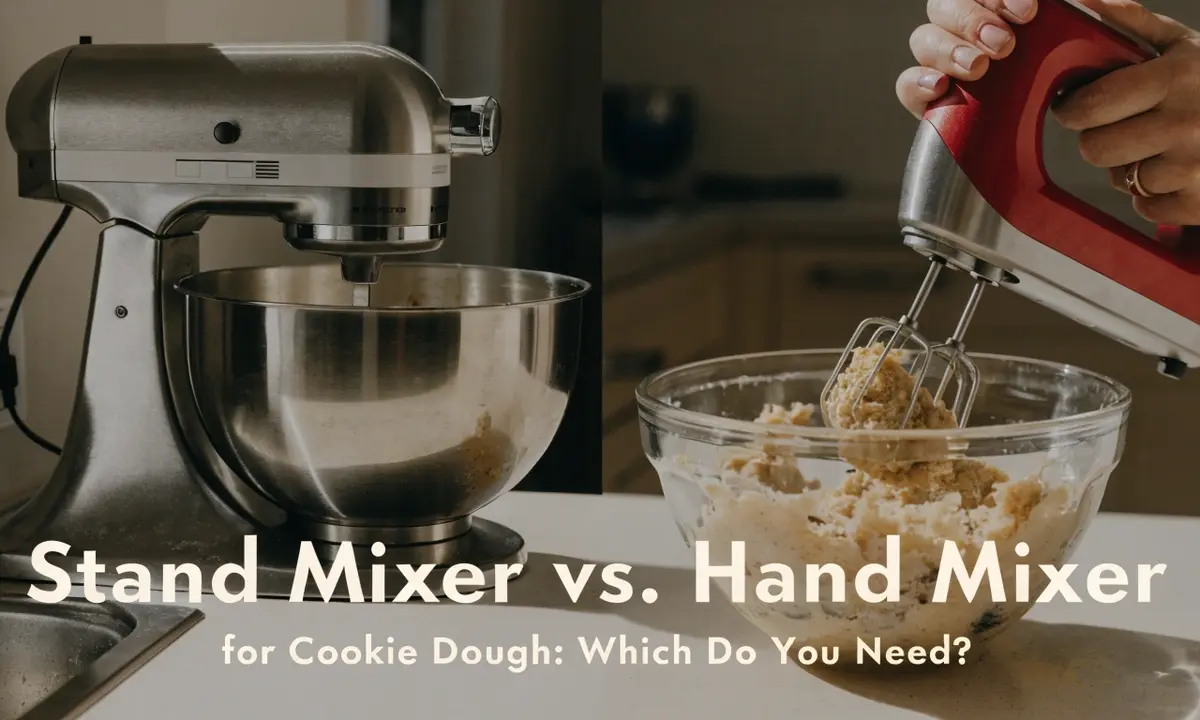
Creaming butter and sugar for a Crumbl-style cookie takes three to four minutes of steady beating, and that single step is where the stand-mixer-versus-hand-mixer question actually gets answered. Both tools can technically make cookie dough. The real difference shows up in how much effort, time, and strain each one asks of you and of the dough itself.
What a Stand Mixer Does Differently
A stand mixer clamps the bowl in place and drives the beater with a motor that sits above or beside the bowl, which means it can maintain constant speed and torque regardless of how stiff the dough gets. That matters for cookie dough loaded with mix-ins, or dense, chilled dough of the kind Crumbl-style recipes often call for. Because the bowl is fixed, both of your hands stay free, so you can scrape down the sides, add ingredients gradually, or start portioning dough while the next batch mixes.
What a Hand Mixer Does Differently
A hand mixer relies on your grip to hold it steady while its beaters spin, so you’re supplying the stability the stand mixer’s clamp provides for free. It’s lighter, cheaper, and easier to store, which makes it a reasonable choice for bakers who make cookies occasionally rather than in large batches. The tradeoff is fatigue: holding a mixer running at full speed through four minutes of creaming, then through a batch of stiff dough, is noticeably more tiring than parking a stand mixer and walking away.
Cookie Dough Specifically: Where the Difference Shows Up
Two moments in a typical cookie recipe put the most demand on a mixer. The first is creaming room-temperature butter with sugar until it’s pale and fluffy, which takes sustained speed for several minutes and is the step most responsible for a cookie’s final texture. The second is folding in flour and mix-ins once the dough turns stiff, especially in thick, Crumbl-style recipes that use less liquid than a thin, crispy cookie would.
A stand mixer holds its speed through both steps without extra effort from you; a hand mixer can bog down in stiff dough, and pushing it too hard is a common way to burn out the motor early. If you’re making cookies in small batches with a soft dough, a hand mixer keeps up fine. If you’re making stiff, high-volume dough regularly, the stand mixer’s steadier torque becomes the more noticeable advantage.
When a Hand Mixer Is Genuinely Enough
If you bake cookies occasionally, in single-recipe batches, and mostly stick to softer doughs, a good hand mixer will do the job without complaint. It’s also the more practical option for small kitchens, since it stores in a drawer instead of taking up counter or cabinet space, and it costs a fraction of even an entry-level stand mixer. For anyone still deciding whether cookie baking is a regular hobby or an occasional one, starting with a hand mixer is a low-risk way to find out.
When You Actually Need a Stand Mixer
Frequent bakers, anyone making double or triple batches, and anyone working with stiff, mix-in-heavy dough will feel the difference within the first few uses. America’s Test Kitchen’s mixer testing, which evaluates performance across exactly these kinds of stiff-dough tasks, has consistently rated bowl-lift and high-torque designs highest for handling heavy loads without stalling, which lines up with what most serious home bakers experience once they upgrade. A stand mixer is also the better investment if you bake other things that demand a mixer, like bread dough or whipped meringue, since those tasks are difficult or impractical by hand.
Quick Comparison
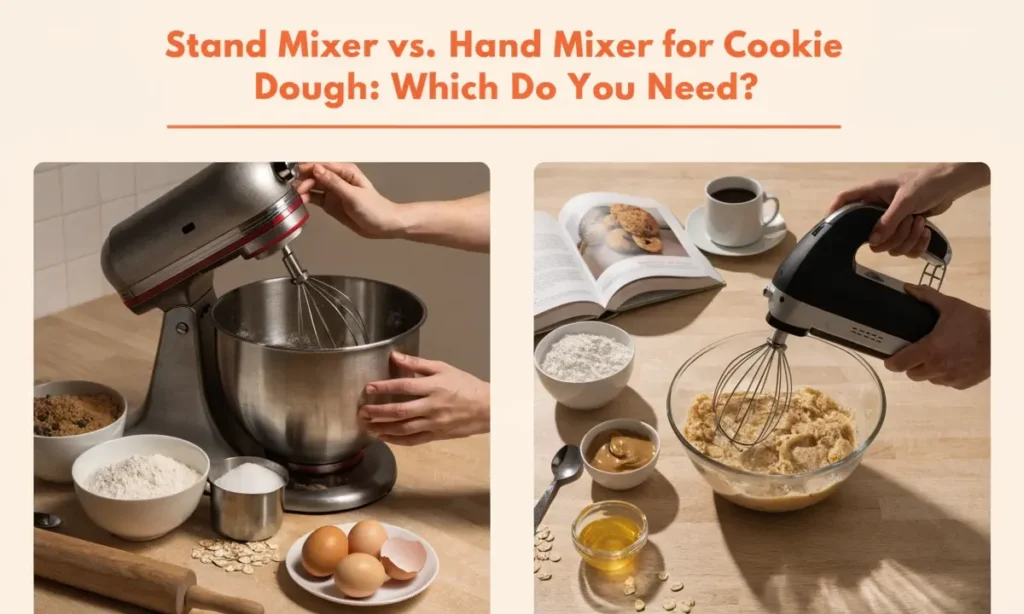
- Stand mixer: hands-free operation, steady torque through stiff dough. Best for frequent bakers, large batches, and thick or mix-in-heavy dough. Watch for higher upfront cost and counter space needed.
- Hand mixer: lightweight, affordable, easy to store. Best for occasional baking and softer doughs in small batches. Watch for arm fatigue and motor strain on stiff dough.
Verdict
Neither tool is objectively better; the right choice depends on how often and how much you bake. As Serious Eats‘ side-by-side testing found, a stand mixer isn’t required to make good cookies, but it consistently makes the process easier on stiff dough and large batches. If you bake cookies a few times a year in modest quantities, a quality hand mixer is a perfectly reasonable, budget-friendly choice. If cookie baking is a regular habit, especially with thick, Crumbl-style dough, a stand mixer earns its cost back in saved time and effort within the first several batches.
Common Questions About Stand and Hand Mixers
Can a hand mixer damage stiff cookie dough recipes?
It can strain the motor over time rather than damage the dough itself. If a recipe consistently produces very stiff dough, let butter soften fully and mix in stages rather than all at once to reduce strain on a hand mixer’s motor.
Do I need a specific bowl size for cookie dough?
A 4.5 to 5-quart bowl comfortably handles a standard double-batch cookie recipe. Larger 6 to 7-quart bowls are worth it mainly for bakers who regularly make triple batches or bread dough in the same mixer.
Is a cheaper stand mixer worth buying over a good hand mixer?
Only if it comes from a reputable brand with a strong motor. A budget stand mixer with a weak motor can actually struggle with stiff dough more than a quality hand mixer, so it’s better to buy a proven hand mixer than an unproven bargain stand mixer.
How long should I cream butter and sugar for cookies?
Most Crumbl-style recipes call for three to four minutes at medium speed, until the mixture is visibly paler and increased in volume. Stopping early is one of the most common reasons home-baked cookies come out denser than expected.
One more practical note: if you’re shopping for either tool, check the attachment ecosystem before you buy. Stand mixers from major brands support dough hooks, wire whisks, and pasta or grinder attachments that extend their use well beyond cookies, while most hand mixers only come with beaters and a basic dough hook. That difference matters if you plan to grow into bread baking or pasta making later, since a stand mixer becomes a long-term kitchen investment rather than a single-purpose tool.
This article is part of our full cluster of in-depth equipment guides supporting our main equipment pillar page.
Read the full guide: Cookie Baking Equipment: The Complete Baker’s Guide
Leave a Reply