
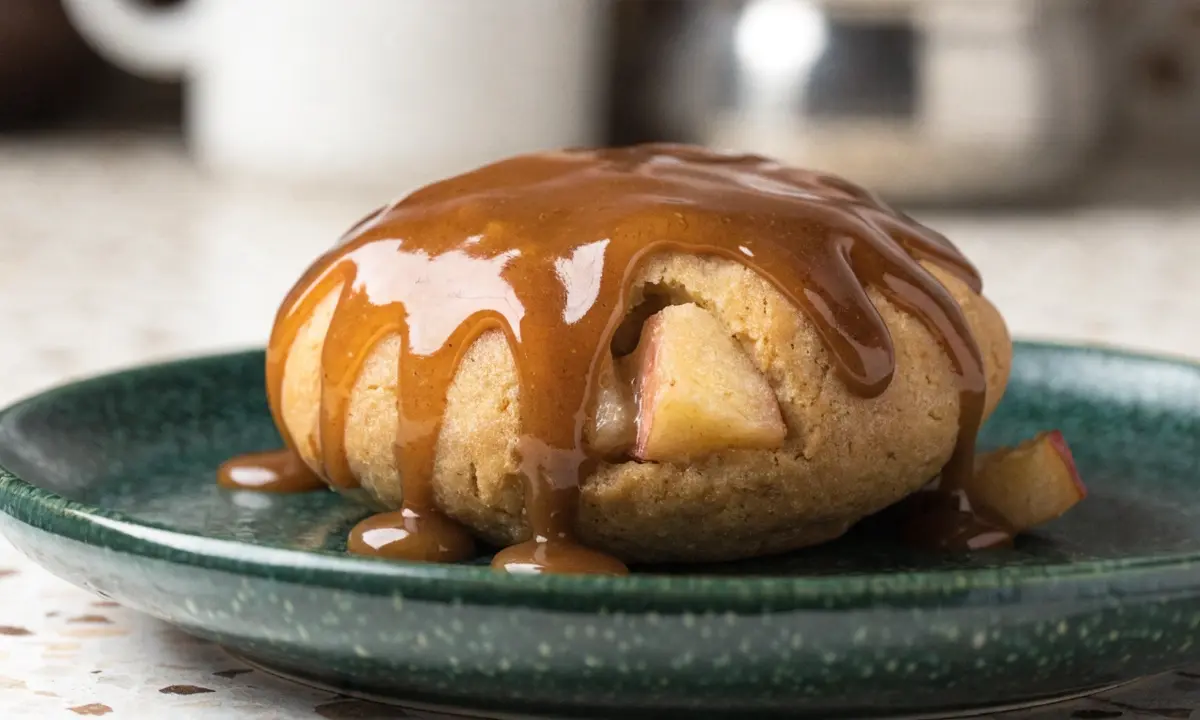
A caramel apple is an experience as much as a flavor — the snap of the candy shell, the tart burst of cold apple underneath, the sticky sweetness that coats your fingers. Translating that experience into a cookie requires thinking beyond simply combining apple and caramel in a dough. The best caramel apple cookies capture the contrast between the two components: a soft, spiced apple base with a molten caramel center or caramel drizzle that hits differently from the cookie itself.
This recipe builds directly on the apple cinnamon cookie base from article 7 — the same brown butter and apple butter foundation — and layers in three distinct caramel elements: a frozen caramel center that melts during baking, a salted caramel cream cheese frosting, and a caramel drizzle finish. Each caramel element is at a different consistency and sweetness level, which is what makes the finished cookie taste like an actual caramel apple rather than just a sweet cookie with caramel on top.
According to Serious Eats’ caramel science guide, the distinct flavor of cooked caramel comes from two simultaneous reactions — the Maillard reaction between amino acids and sugars, and caramelization (the thermal decomposition of sugar itself). The ratio of these two reactions, which is controlled by temperature and timing, determines whether caramel tastes buttery, nutty, or bitter. Understanding this helps you make caramel that tastes intentionally complex rather than accidentally burnt. This article is part of the seasonal cookie flavors guide.
The three-layer caramel strategy
Layer 1 — Frozen caramel center: Melts during baking into a gooey, flowing center. Soft and yielding. Layer 2 — Salted caramel cream cheese frosting: Applied after baking. Cool, tangy, and dense with buttery caramel flavor. Layer 3 — Caramel drizzle: Applied last. Thin, glossy, and slightly firm — provides visual drama and a concentrated sweet hit. Three different textures and intensities of the same flavor = a cookie that actually tastes like a caramel apple.
Making the Caramel: Homemade vs. Store-Bought
This recipe offers both a homemade caramel sauce and a store-bought shortcut. The homemade version produces a noticeably more complex, less sweet caramel with a deeper roasted flavor — and it keeps for 2 weeks in the refrigerator, so a single batch serves all three caramel applications in this recipe plus future use. The store-bought version is entirely workable and saves 20–25 minutes.
Homemade Salted Caramel Sauce
Ingredients
- 200g (1 cup) granulated sugar
- 90g (6 tbsp) unsalted butter, room temp, cubed
- 120ml (½ cup) heavy cream, room temp
- 1 tsp flaky sea salt
- 1 tsp pure vanilla extract
Method
Heat sugar in a heavy-bottomed saucepan over medium heat, stirring occasionally, until fully melted and deep amber — 10–12 minutes. Remove from heat, add butter (it will bubble aggressively), whisk until smooth. Slowly pour in cream, whisking constantly. Return to low heat 1 minute. Remove, stir in salt and vanilla. Cool 30 minutes before using. Store refrigerated up to 2 weeks.
Store-Bought Shortcut
Use a quality jarred caramel sauce — Trader Joe’s Fleur de Sel Caramel Sauce, Ghirardelli Caramel Sauce, or Stonewall Kitchen Sea Salt Caramel Sauce all work well. Avoid ice cream caramel topping syrups (too thin and sweet) or caramel candy melts (too thick and waxy).
For the frozen caramel center, a slightly thicker store-bought caramel freezes more cleanly than a very thin sauce. If your caramel is thin, stir in a teaspoon of heavy cream cheese to thicken before freezing the centers.
Add ½ tsp of flaky salt to store-bought caramel before using — it noticeably improves the flavor complexity.
The Recipe
Ingredients — Makes 12–14 large cookies
Cookie dough (apple butter base)
- 170g (¾ cup / 1½ sticks) unsalted butter, browned and cooled
- 180g (¾ cup) dark brown sugar, packed
- 50g (¼ cup) granulated sugar
- 130g (½ cup) apple butter, thick
- 1 large egg, room temperature
- 1 tsp pure vanilla extract
- 300g (2½ cups) all-purpose flour
- 1 tsp baking soda
- ½ tsp baking powder
- ¾ tsp fine sea salt
- 2 tsp ground cinnamon
- ½ tsp ground nutmeg
- ¼ tsp ground ginger
- ¼ tsp ground allspice
Frozen caramel centers
- 120ml (½ cup) caramel sauce, homemade or store-bought
- Freeze 2+ hours in a silicone ice cube tray
Salted caramel cream cheese frosting
- 225g (8 oz) full-fat block cream cheese, cool room temp
- 115g (½ cup / 1 stick) unsalted butter, cool room temp
- 300g (2½ cups) powdered sugar, sifted
- 60ml (¼ cup) caramel sauce (room temperature)
- ½ tsp fine sea salt
- 1 tsp pure vanilla extract
Caramel drizzle + garnish
- 60ml (¼ cup) caramel sauce, slightly warmed
- Flaky sea salt
- Optional: thin dried apple chip, candied walnut pieces
Method
1-Freeze the caramel centers — do this first
Pour caramel sauce into a silicone ice cube tray — fill each cavity about two-thirds full to produce a disc approximately 2–3cm in diameter that fits inside the dough ball. Freeze for at least 2 hours, or until completely solid. The caramel discs must be fully frozen before you assemble the cookies — a partially frozen center will not hold its shape during assembly and will leak before the cookie sets. Once frozen, pop them out and store in a zip-seal bag in the freezer until ready to use. Work quickly once you remove them — they soften at room temperature within 3–4 minutes.
2-Make the cookie dough
Brown butter and cool to room temperature. Whisk with both sugars until combined. Add apple butter, egg, and vanilla, and whisk until smooth and slightly lightened. Add sifted dry ingredients all at once and fold with a rubber spatula until just combined. Cover and refrigerate for at least 2 hours — overnight preferred. The dough must be cold enough to handle without sticking for the stuffing step to work cleanly.
3-Stuff and seal the cookies
Remove caramel discs from freezer immediately before stuffing — do not let them sit at room temperature. Working quickly, scoop approximately 60g of chilled dough, flatten into a disc in your palm, place one frozen caramel center in the middle, and fold the dough up around it, sealing all edges completely. Roll between your palms into a smooth ball. Place on parchment-lined baking sheet. Repeat for all cookies. If at any point the dough becomes soft and sticky, refrigerate the assembled balls for 15 minutes before proceeding. The caramel center must be fully enclosed — any gap will cause it to leak out during baking.
4-Chill assembled cookies, then press and bake
Refrigerate assembled balls on the pan for 20 minutes — this re-chills both the dough and the caramel center, which may have softened slightly during assembly. Preheat oven to 375°F / 190°C. Press each ball into a disc about 2.5cm thick with the flat bottom of a glass — press firmly but not so hard you can feel the caramel center giving way. Bake 12–14 minutes until edges look set and the surface is matte. The center may look very underdone — this is correct; the melted caramel makes the center appear wetter than it is. Pan-rest 12–15 minutes before moving. The caramel center needs time to partially re-set or it will flow out when the cookie is lifted.
5-Make the salted caramel cream cheese frosting
Beat cream cheese and butter together on medium speed until smooth, about 2 minutes. Add sifted powdered sugar in two additions, beating on low between each. Add room-temperature caramel sauce, salt, and vanilla. Beat on medium until just smooth and combined. The caramel adds both flavor and liquid to the frosting — if it is too soft to pipe, refrigerate 20–30 minutes. Do not add more powdered sugar to compensate; it makes the frosting grainy. The caramel must be at room temperature, not warm — warm caramel will melt the butter in the frosting and produce a loose, unworkable texture.
6-Frost, drizzle, and garnish
Apply frosting to fully cooled cookies using a 1M star tip or offset spatula. Warm the remaining caramel drizzle slightly (10 seconds in the microwave) until it flows from a spoon in a thin, even stream. Drizzle over the frosting in a back-and-forth motion. Add a pinch of flaky sea salt immediately — it adheres to the wet caramel. Optional: press a thin dried apple chip vertically into the frosting center and add a candied walnut piece for textural contrast. Refrigerate until ready to serve.
The Frozen Caramel Center: Why It Works and How to Not Leak
The frozen center technique works because the caramel goes into the oven as a solid rather than a liquid. In the first 4–5 minutes of baking, while the dough is still setting around it, the caramel remains solid enough to stay in place. By the time the center reaches the temperature at which caramel flows, the dough structure around it has set sufficiently to contain it. The result is a gooey, flowing center at serving temperature that stays inside the cookie during baking.
The three most common reasons the caramel leaks:
- Incomplete sealing: Any gap or thin spot in the dough wrapper allows caramel to escape through the path of least resistance. Check each assembled ball visually and press any thin spots firmly before chilling. Run your fingers over the entire surface — you should not be able to feel the caramel disc inside.
- Caramel not fully frozen: Partially frozen caramel begins to flow before the dough sets. Two hours minimum in the freezer; three is safer. If you’re in doubt, freeze overnight.
- Dough too warm during assembly: Warm dough is sticky and difficult to seal cleanly. If the dough starts sticking to your hands during assembly, refrigerate it for 20 minutes before continuing. Cold dough wraps and seals cleanly.
If caramel does leak during baking, it pools into a thin disc of toffee on the parchment around the cookie. Once cooled, this disc peels away from the parchment and can be broken into shards for garnish — a happy accident that adds a crunchy toffee element to the finished cookie.
Caramel Science: Temperature, Color, and Flavor Control
When making homemade caramel, temperature is the single most important variable. The color and flavor of the caramel changes dramatically with temperature:
| Temperature | Color | Flavor | Best for |
|---|---|---|---|
| 160°C / 320°F | Pale gold | Sweet, light, butterscotch-like — not much complexity | Candy coating, light glazes |
| 170°C / 340°F | Amber | Rich, buttery, complex — classic caramel flavor | Sauces, frostings, fillings |
| 180°C / 356°F | Deep amber | Intensely complex — nutty, slightly bitter, sophisticated | This recipe — best balance of complexity and sweetness |
| 190°C+ / 374°F+ | Very dark / black | Bitter, acrid — burnt | ❌ Discard and start over |
If you do not have a candy thermometer, judge by color: pull the caramel from heat when it is a deep amber — the color of dark honey or aged whiskey. It will continue to darken slightly from residual heat after you remove it from the burner, so pull it 5–10 seconds before you think it is ready.
Why flaky salt — not fine salt — on the finish
Fine salt dissolves into the caramel immediately on contact and simply makes the drizzle saltier. Flaky sea salt (Maldon or fleur de sel) sits on the surface of the caramel drizzle and delivers salt in concentrated bursts as you eat the cookie — the same principle as the contrast between a salted pretzel’s crust and its dough interior. The intermittent salt hit is what makes a “salted caramel” experience feel sophisticated rather than just salty-sweet. Use it for garnish only; use fine salt within the caramel sauce itself.
Variations Worth Trying
Caramel apple with toffee bits
Fold 80g of crushed toffee bits (Heath bar pieces or Skor chips) into the dough before chilling. The toffee provides additional caramel flavor within the cookie itself and adds crunchy textural contrast to the soft crumb. The toffee bits partially melt during baking, creating small caramel pockets throughout the cookie in addition to the center. Be careful not to overfold — toffee bits break down further with excessive mixing.
Caramel apple with white chocolate
Add 100g of chopped white chocolate to the dough alongside (or instead of) toffee bits. White chocolate’s milky sweetness amplifies the apple butter flavor and adds a creamy richness that makes the cookie taste more indulgent. Replace the caramel drizzle with a white chocolate drizzle (melted white chocolate thinned with a teaspoon of coconut oil) for a visual contrast against the amber frosting.
No-stuff version with caramel swirl topping
Skip the frozen center entirely. After pressing the dough balls into discs on the baking sheet, spoon ½ teaspoon of room-temperature caramel sauce onto the center of each disc and use a toothpick to swirl it into the top of the dough. The caramel bakes into the top surface of the cookie, creating a caramelized swirl pattern and an intensely flavored top crust. Finish with the cream cheese frosting and another caramel drizzle. Simpler assembly, slightly different eating experience — the caramel is in the crust rather than the center.
Caramel apple pecan
Toast 80g of pecan halves in a 325°F oven for 8 minutes, cool, then roughly chop. Fold into the dough. Press a whole toasted pecan half into the center of each cookie before baking. The pecan-caramel-apple combination hits all the flavors of a traditional Southern praline while staying grounded in the fall fruit context of the base cookie. Bridges naturally to article 9 — the maple pecan cookie.
Troubleshooting
| Problem | Likely cause | Fix |
|---|---|---|
| Caramel leaked out | Incomplete sealing; caramel not fully frozen; dough too warm | Check all seams; freeze caramel 3+ hours; chill assembled balls 20 min before baking |
| Center is hard, not gooey | Overbaked; caramel re-solidified before serving | Pull 1–2 min earlier; serve cookies within 30 min of baking for gooey center |
| Frosting too runny | Caramel too warm; cream cheese too warm | Ensure caramel at room temp only; refrigerate frosting 20–30 min before piping |
| Homemade caramel seized / grainy | Cream too cold when added; sugar crystals on pan sides contaminated the batch | Warm cream before adding; wipe pan sides with wet pastry brush before sugar melts fully |
| Caramel center not visible when cutting | Caramel disc too small or placed off-center | Fill ice cube cavities fuller; center the disc carefully during assembly |
Serving and Storage
Caramel apple cookies are best served within 30–60 minutes of baking for maximum gooey-center effect. The caramel center re-solidifies as the cookie cools to room temperature — still delicious, but the molten center experience requires eating them warm. For events and gatherings, bake in batches timed to serving rather than all at once.
🗓️-Dough (unstuffed)
Fridge: 72 hrs
Freezer: 3 months
Stuff from frozen +2 min
🍪-Assembled (stuffed, unbaked)
Freezer only: 2 months
Bake from frozen +4–5 min
Do not fridge — caramel softens
🎂-Baked and frosted
Fridge: 3–4 days
Best within 24 hrs
Reheat 10 sec for gooey center
Frequently Asked Questions
Can I use Werther’s or caramel candies instead of caramel sauce for the center?
Yes — this is actually a popular shortcut. Place 2–3 Werther’s Original Soft Caramels (or similar soft caramel candies, not hard caramels) in the center of each dough ball instead of the frozen caramel disc. They melt during baking into a gooey center with a slightly different — more butterscotch-adjacent — flavor than a homemade caramel sauce. The technique is the same; the only difference is that you don’t need to pre-freeze anything, which simplifies the assembly significantly.
How do I reheat a cookie to get the gooey center back?
Microwave an unfrosted cookie for 10–12 seconds on a microwave-safe plate. The caramel center re-melts quickly. Do not microwave frosted cookies — the cream cheese frosting will melt and separate. For frosted cookies, warm them briefly in a 300°F oven for 3–4 minutes (the frosting will soften but not melt if the time is short). The center will be warm and gooey; let cool 1 minute before eating so the caramel doesn’t burn your mouth.
Can I make these without the frozen center for a simpler version?
Absolutely. The cookie base with salted caramel cream cheese frosting and caramel drizzle is excellent on its own — the caramel apple flavor reads clearly even without the molten center. The no-stuff caramel swirl variation described above is the simplest version and still produces a dramatic, visually impressive cookie. The frozen center is the showstopper version for when you want maximum impact.
Why does my homemade caramel turn grainy?
Grainy caramel is caused by sugar crystallization — a chain reaction where one sugar crystal triggers others to form, rapidly converting smooth liquid caramel into a grainy, sandy texture. The most common trigger is undissolved sugar crystals on the sides of the pan falling back into the melted sugar. Prevent this by washing down the sides of the pan with a wet pastry brush during the early stages of melting, before the sugar becomes fully liquid. Once fully melted and amber, the risk of crystallization is minimal. If crystallization occurs, add 2 tablespoons of water and reheat gently, stirring until the crystals dissolve.
Continue reading — Seasonal Cookie Flavors
Leave a Reply