
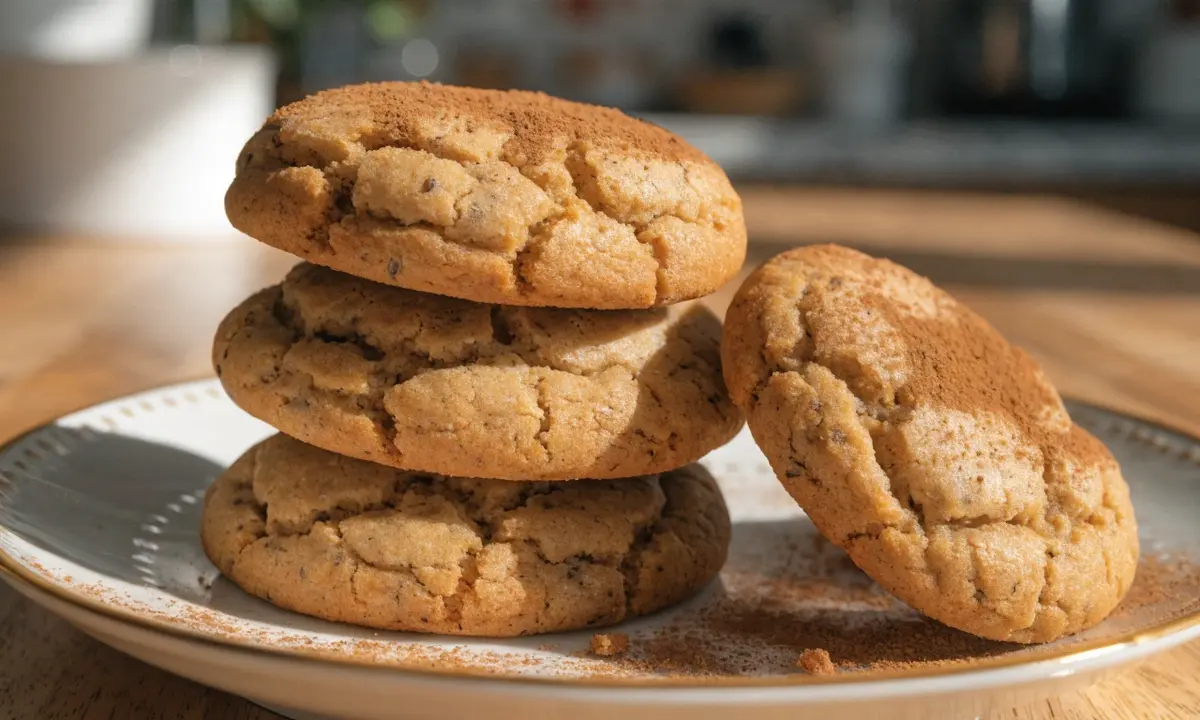
There is a pumpkin spice cookies problem, and most recipes have it: they’re cakey. Not in a good, intentional way — in the accidental, disappointing way that happens when you follow a standard cookie recipe and swap in pumpkin puree without adjusting anything else. The extra moisture from the puree changes the flour-to-liquid ratio, the leavening overdoes it, and what comes out of the oven is a soft, pillowy mound that tastes like a muffin top — sweet and spiced, but with none of the chew, density, or crisp edge that makes a cookie worth reaching for.
This recipe fixes that problem directly. It addresses the moisture issue at the source, uses a spice blend built for complexity rather than generic warmth, and produces a thick, chewy cookie with a defined edge and a soft — not spongy — center. The kind of pumpkin spice cookie that earns a second one.
According to Sally’s Baking Addiction’s pumpkin cookie testing, the single most effective technique for preventing cakey pumpkin cookies is blotting excess moisture from the pumpkin puree before adding it to the dough — a step that almost no standard recipe includes but that makes a measurable difference in final texture. This guide explains that step, why it works, and everything else needed to get fall’s most requested cookie right.
This article is part of the seasonal cookie flavors guide. For the full fall cookie picture, see our holiday cookie overview and the upcoming apple cinnamon and caramel apple articles in this cluster.
Why pumpkin cookies go cakey — and how this recipe prevents it
Canned pumpkin puree is approximately 90% water by weight. Adding it to cookie dough without reducing other liquid ingredients or removing excess moisture introduces far more water than the flour can properly absorb — the result is a batter-like dough that bakes into a soft, airy, muffin-like texture. Three adjustments fix this: blotting the puree, using only one egg yolk (no white), and slightly increasing the flour ratio.
The Pumpkin Moisture Problem: Understanding It Before Fixing It
A standard drop cookie recipe — chocolate chip, for instance — contains very little liquid beyond what the eggs and butter naturally contribute. The dough is thick enough to hold a scooped shape, and that thickness is what produces the characteristic flat-bottomed, domed cookie with a defined edge.
Pumpkin puree is not a fat replacement or a flavor addition — it is a significant moisture addition. A typical pumpkin cookie recipe uses 120–240g (½–1 cup) of pumpkin puree, which contributes 110–220g of water to the dough. That is roughly equivalent to adding half a cup to a full cup of liquid to a recipe that normally contains none. The flour absorbs some of this, but not all — the result is a looser, wetter dough that spreads less than a standard cookie (because pumpkin’s fiber gives it body) but bakes up with a light, airy crumb structure instead of the dense, chewy one you want.
Additionally, most pumpkin cookie recipes overuse leavening. Baking powder is added to help lift what is a quite dense, fiber-rich dough — but in excess, it creates the “muffin top” dome that is the most recognizable characteristic of a cakey pumpkin cookie. Reducing baking powder and removing the egg white (which also contributes to lift and airiness) are the chemical levers that address this.
The Recipe
Ingredients — Makes 12–14 large cookies
Cookie dough
- 195g (¾ cup) canned pumpkin puree — blotted (see method)
- 170g (¾ cup / 1½ sticks) unsalted butter, browned and cooled
- 200g (1 cup) dark brown sugar, packed
- 50g (¼ cup) granulated sugar
- 1 large egg yolk only, room temperature
- 2 tsp pure vanilla extract
- 300g (2½ cups) all-purpose flour
- 1 tsp baking soda
- ¼ tsp baking powder
- ¾ tsp fine sea salt
- 2 tsp ground cinnamon
- 1 tsp ground ginger
- ½ tsp ground nutmeg
- ¼ tsp ground cloves
- ¼ tsp ground allspice
- ⅛ tsp ground black pepper
Brown butter cream cheese frosting
- 225g (8 oz) full-fat block cream cheese, cool room temp
- 60g (4 tbsp) unsalted butter, browned and cooled to room temp
- 360g (3 cups) powdered sugar, sifted
- 1 tsp pure vanilla extract
- ½ tsp ground cinnamon
- Pinch fine sea salt
Optional garnish
- Cinnamon sugar (1 tbsp sugar + ½ tsp cinnamon)
- Flaky sea salt
- Candied pepitas
Method
1-Blot the pumpkin — the critical first step
Spread 195g of canned pumpkin puree across 4–5 layers of paper towels or a clean kitchen towel. Cover with another layer of paper towels and press firmly. Let sit 5 minutes, then press again. Repeat until the paper towels are no longer absorbing liquid — typically 2–3 rounds. You should remove approximately 30–40g of moisture. Measure the blotted puree after this step, not before — you need 150g of blotted puree for the recipe. This single step is the most important thing you can do for texture.
2-Brown the butter
Melt butter in a light-colored saucepan over medium heat. Cook, stirring frequently, 4–6 minutes until milk solids are golden and the aroma is nutty. Pour into a large mixing bowl and cool to room temperature — approximately 30 minutes. Do not rush this with refrigeration; the butter needs to be fluid but cool, not solid. Brown butter pairs remarkably well with pumpkin spice — the nutty Maillard compounds deepen the warm spice profile significantly.
3-Combine wet ingredients
Whisk cooled brown butter with both sugars until well combined, about 1 minute. Add the egg yolk and vanilla and whisk vigorously for 1 minute until slightly lightened. Add the blotted pumpkin puree and whisk until fully incorporated and smooth. The mixture will look thick and uniform with a deep amber-orange color from the combination of brown butter and pumpkin.
4-Bloom spices, then add dry ingredients
Whisk all dry ingredients — flour, baking soda, baking powder, salt, and all spices — together in a separate bowl. Add to the wet mixture all at once and fold with a rubber spatula until just combined. The dough will be noticeably thicker than a standard cookie dough but softer than a rolled dough — somewhere between a thick brownie batter and a standard drop cookie dough. Do not overmix.
5-Chill — minimum 2 hours, overnight preferred
Cover and refrigerate for at least 2 hours. The dough will be too soft to scoop immediately after mixing. Overnight chilling produces the best flavor — the spices bloom considerably with rest, and the brown butter and pumpkin flavors meld into something more complex and rounded than a freshly mixed dough. After chilling, the dough should be firm enough to scoop cleanly with a disher.
6-Scoop, press, and bake
Preheat oven to 375°F / 190°C — verify with an oven thermometer. Line baking sheets with parchment. Using a #16 disher scoop, portion dough into balls (approximately 60g each). Place 6 per half-sheet pan. Press each ball into a disc about 2cm thick with the flat bottom of a glass. Bake 11–13 minutes until the edges look set and the surface appears matte. The center should still look slightly underdone. Rest on the pan 10 full minutes before transferring — these cookies are more fragile warm than a standard dough due to the pumpkin’s moisture content.
7-Make the brown butter cream cheese frosting
Brown 60g butter as above and cool to firm room temperature. Beat browned butter and cream cheese together on medium speed until smooth, about 2 minutes. Add sifted powdered sugar in two additions, beating on low between each. Add vanilla, cinnamon, and salt and beat on medium until just smooth. If the frosting is too soft to pipe, refrigerate 15–20 minutes. Apply with a 1M star tip or offset spatula. Garnish immediately with a pinch of cinnamon sugar or a few candied pepitas.
The Spice Blend: Why Generic “Pumpkin Spice” Falls Short
Pre-mixed pumpkin spice blends sold in grocery stores are typically a cinnamon-heavy mixture with minor supporting spices in ratios designed to be broadly inoffensive rather than complex. The result is fine — but it tastes like “pumpkin spice” as a category rather than something distinctive.
Building your own blend from individual spices gives you control over each component and produces a more layered, interesting result. Here is what each spice contributes in this recipe:
| Spice | Amount | Flavor role | Effect if increased |
|---|---|---|---|
| Cinnamon | 2 tsp | Dominant warm backbone — the most recognizable pumpkin spice note | Sweeter, more familiar — less complexity |
| Ginger | 1 tsp | Bright heat and sharpness that prevents the blend from reading as flat | Sharper, more gingerbread-adjacent |
| Nutmeg | ½ tsp | Earthy, floral warmth — the “cozy” note in fall baking | More complex, slightly medicinal at high quantities |
| Cloves | ¼ tsp | Deep, almost smoky warmth — use sparingly, very potent | Quickly overpowers — increase in ⅛ tsp increments only |
| Allspice | ¼ tsp | Rounds and bridges the other spices — smells of all four simultaneously | More complexity, richer overall blend |
| Black pepper | ⅛ tsp | Amplifies and extends the heat of ginger; prevents the blend reading as sweet-only | Becomes identifiable as pepper — keep to ⅛ tsp |
If you want to use a pre-made pumpkin spice blend instead: substitute 2½ tsp of the blend for all the individual spices above. The result will be good but will taste more generic than the individual-spice version — the proportions in commercial blends are designed for broad appeal rather than complexity.
Canned vs. Fresh Pumpkin: Which to Use
For cookie baking: use canned pumpkin puree, specifically Libby’s 100% Pure Pumpkin. This is not a compromise — it is the correct choice. Canned pumpkin is more consistent in moisture content, flavor concentration, and texture than homemade pumpkin puree, which varies dramatically depending on the variety of pumpkin used and how long it was roasted. Serious Eats’ investigation into canned pumpkin found that commercial canned pumpkin (Libby’s specifically) is made from a proprietary squash variety selected for density and flavor concentration — it actually produces more consistent and better-flavored results in baked goods than most jack-o’-lantern pumpkins processed at home.
One important label check: make sure you are buying 100% pure pumpkin puree, not pumpkin pie filling. Pumpkin pie filling contains added sugar, spices, and sometimes sweetened condensed milk — it will throw off both the sweetness and the spice balance of this recipe significantly.
The blotting step — exactly how to do it
Spread pumpkin in a thin layer across 4–5 stacked paper towels. Cover with another 3–4 paper towels. Press down firmly and evenly with the palm of your hand. Wait 2 minutes, then press again. Peel back the top towels and check — if they are orange-stained and damp, repeat with fresh towels. You’re done when the towels come away with only light staining. The puree will look slightly darker and drier — this is correct. Scrape it off the towels and weigh it: you need 150g of blotted puree. Start with 195g unblotted to reach this target.
Alternative method: Line a fine-mesh strainer with a paper towel or cheesecloth, add the pumpkin, and let it drain in the refrigerator overnight. This is even more effective than pressing and produces a noticeably drier puree — particularly useful if your canned pumpkin seems especially wet.
Why Only an Egg Yolk — No White
Egg whites contribute two things to cookie dough: protein (which builds structure and creates a firmer crumb) and water (approximately 75% of egg white is water). For a standard chocolate chip cookie, both are useful. For a pumpkin cookie that is already fighting excess moisture from the puree, adding egg white’s water and structure-building protein is counterproductive on both counts.
The yolk alone provides the fat (which contributes richness and chewiness), the emulsifying lecithin (which binds the dough together), and enough moisture for cohesion — without the airiness-promoting proteins in the white that create the lifted, cakey texture. Using a single yolk is the second-most important structural decision in this recipe after the blotting step. King Arthur Baking’s egg function guide details exactly how each component of an egg affects baked goods texture — the yolk-only approach is a direct application of these principles.
Variations Worth Trying
White chocolate chip pumpkin spice
Fold 150g of quality white chocolate chips into the dough before chilling. The creamy sweetness of white chocolate pairs naturally with warm spices, and the chips provide textural contrast and richness that the lean pumpkin dough (no whole egg, no added chocolate) otherwise lacks. Finish with the cream cheese frosting and a dusting of cinnamon sugar.
Pumpkin snickerdoodle
Skip the frosting entirely. Instead, roll the chilled dough balls in a cinnamon-sugar mixture (3 tbsp sugar + 1½ tsp cinnamon) before pressing and baking. The rolling creates a slightly crisp sugar crust on the outside while the inside stays soft and pumpkin-spiced — a cleaner, less rich option than the frosted version that is easier to transport and stores better at room temperature.
Pumpkin maple glaze (instead of cream cheese frosting)
Whisk together 240g sifted powdered sugar, 3 tablespoons pure maple syrup, 1–2 tablespoons of milk or cream, and a pinch of cinnamon until pourable but thick. Drizzle over cooled cookies and let set. The maple note amplifies the pumpkin and spice combination in a way that feels more autumnal than cream cheese frosting. Best for cookie trays where individual servings don’t need to be stacked.
Vegan pumpkin spice cookies
Replace butter with vegan stick butter (same quantity). The egg yolk is the only non-vegan ingredient in the cookie itself — replace with 1 tablespoon of aquafaba (the liquid from canned chickpeas). The blotting and chilling steps remain the same. For the frosting, use vegan cream cheese (Violife block-style) and vegan butter at the same ratios. The spice blend is fully vegan as written.
Troubleshooting
| Problem | Likely cause | Fix |
|---|---|---|
| Still too cakey | Pumpkin not blotted enough; used whole egg instead of yolk only | Blot more aggressively — drain overnight in fridge; confirm only yolk used |
| Cookies spread too flat | Dough not chilled enough; butter too warm when mixed | Chill minimum 2 hours; cool brown butter fully before mixing |
| Spice flavor too faint | Old spices; no overnight dough rest | Replace spices older than 12 months; chill dough overnight for flavor development |
| Cookies too dry | Pumpkin over-blotted; overbaked | Weigh blotted puree to confirm 150g; pull from oven when center still glossy |
| Dough too sticky to scoop | Insufficient chilling; puree not blotted enough | Extend chill to 4+ hours; use disher scoop and work quickly |
| Frosting too loose | Cream cheese or butter too warm | Refrigerate frosting 20 min before piping; cool brown butter fully |
Storage Guide
🗓️-Dough
Fridge: up to 48 hrs
Freezer: 2 months
Bake from frozen +4 min
🍪-Baked, unfrosted
Room temp: 4 days
Freezer: 2 months
Pumpkin = moister longer
🎂-Frosted
Fridge: 4–5 days
Serve at room temp
Do not freeze frosted
Frequently Asked Questions
Can I use pumpkin pie spice instead of individual spices?
Yes — substitute 2½ teaspoons of pumpkin pie spice for all the individual spices listed. The result is a well-spiced cookie, though slightly less complex than the individual-spice version. If using a pre-made blend, taste a small amount of it first — some commercial blends are heavily cinnamon-dominated and may produce a one-note result. Adjust by adding ¼ teaspoon of ground ginger if the blend tastes flat.
Can I use fresh roasted pumpkin instead of canned?
You can, but expect more variability in results. Fresh-roasted pumpkin puree varies in moisture content and flavor concentration depending on the pumpkin variety and roasting time. If using fresh, roast until very soft and then press out as much moisture as possible through a cheesecloth before blotting. Sugar pumpkins and kabocha squash produce better flavor than carving pumpkins, which tend to be watery and bland.
Is the brown butter actually necessary, or can I use regular softened butter?
Regular softened butter works and produces a good cookie. The brown butter upgrade produces a noticeably more complex, interesting cookie — the nutty Maillard compounds from the browning deepen and amplify the warm spice blend in a way that is immediately apparent in a side-by-side comparison. If you’re making these for the first time or are short on time, regular butter is fine. Once you’ve made the brown butter version, it is hard to go back.
Why does the recipe use dark brown sugar instead of light?
Dark brown sugar contains approximately twice the molasses of light brown sugar, giving it a richer, more caramel-like flavor and more hygroscopic (moisture-retaining) properties. In a pumpkin cookie where we are already fighting a tendency toward dryness from the blotted puree, dark brown sugar’s moisture retention helps keep the cookie soft for longer. The deeper molasses flavor also complements the warm spice blend — it reads as “autumn” in a way that light brown sugar does not.
Continue reading — Seasonal Cookie Flavors
- Christmas Cookie Recipes: 10 Gourmet Flavors for Your Holiday Cookie Tray
- Gingerbread Cookie Recipe: The Thick, Soft Gourmet Version
- Peppermint Mocha Cookies: A Holiday Coffee-Shop Favorite at Home
- Eggnog Cookie Recipe: Capturing the Holiday Drink in Cookie Form
- Sugar Cookie Recipe for Decorating: Holds Shape, Tastes Great
- ← Back to Seasonal Cookie Flavors: A Year-Round Baking Guide
Leave a Reply