
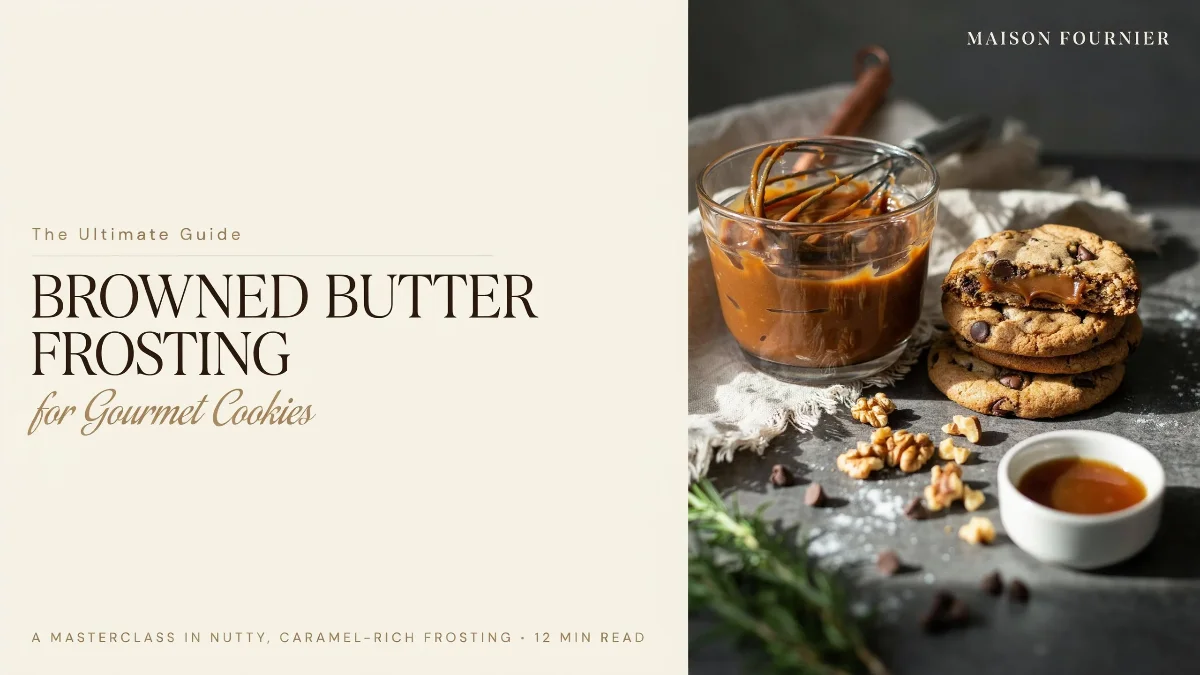
If you want a frosting that tastes like it came from a bakery rather than a bag of powdered sugar, brown the butter. It’s a five-minute step that turns an ordinary, sweet-and-simple topping into something nutty, toasty, and caramel-like — the kind of flavor people can’t quite place but keep coming back for.
Browned butter frosting is also one of the easiest ways to make a cookie feel gourmet. The sweetness is balanced by deeper, toasted notes, which is exactly what a thick, Crumbl-style cookie needs under a generous swirl. In this guide you’ll learn how browned butter works, three base recipes (buttercream, cream cheese, and a thin glaze), the exact ratios and temperatures that make each one stable, how to fix common problems, and which cookies to pair it with. This article is part of our pillar guide to Gourmet Frostings, Glazes, and Cream Cheese Icing, and fits into the wider world of Crumbl-style baking.
💡 Quick take: Browned butter frosting has three rules: brown the butter just until amber, chill it until it’s soft and opaque again, then treat it like regular butter. Skipping the chill step is the most common reason browned butter frosting turns out greasy or runny.
What Is Browned Butter, and Why Does It Work in Frosting?
Butter is mostly fat, with some water and a small amount of milk solids. When you heat it, the water cooks off and the milk solids sink to the bottom of the pan and begin to toast. That toasting is what gives browned butter its nutty aroma and caramel-like flavor.
For frosting, that matters for two reasons:
- Flavor balance. American-style frostings are very sweet. The toasted, slightly bitter notes in browned butter give the sweetness something to push against, so the frosting tastes richer rather than just sweeter.
- Less water. Because some water evaporates during browning, the butter has a little less moisture than it started with. That affects how much liquid you need to add, so go slowly and adjust to texture rather than following a fixed amount.
Browned butter also works as a flavor infusion through the fat, which is the technique our pillar guide recommends: building flavor into the butter itself keeps the frosting stable, whereas adding extra liquid can loosen it.
How to Brown Butter (Step by Step)
The technique is the same for every recipe below.
- Use a light-colored pan. A stainless steel or light-bottomed saucepan lets you see the color change. A dark non-stick pan hides it.
- Melt over medium heat. Cut the butter into pieces and let it melt, stirring or swirling.
- Watch it foam. The butter will bubble and then foam. Keep stirring so the milk solids don’t stick.
- Look and smell. After about 5–8 minutes, you’ll see amber-brown specks on the bottom of the pan and smell a nutty, toasty aroma.
- Pull it off the heat right away. Butter goes from perfect to burnt quickly. Pour it into a heatproof bowl immediately, scraping in all the brown bits from the bottom of the pan — that’s where most of the flavor is.
- Chill until soft and opaque. Refrigerate for 30–60 minutes, stirring occasionally, until the butter looks like softened butter: scoopable, matte, and slightly creamy, not liquid and not rock hard.
Make-ahead tip: Brown the butter up to 3 days ahead and keep it covered in the refrigerator. Bring it to a soft, cool room temperature before using.
Recipe 1: Browned Butter Buttercream (Crumbl-Style Swirl)
This is the base recipe: thick enough to hold a swirl, sweet but balanced, and stable at cool room temperature. It makes about 2 cups, enough for 10 large cookies with a generous swirl or 12 cupcakes.
Prep time: 15 minutes (plus 30–60 minutes chilling the browned butter)
Ingredients
- 1 cup (227 g) unsalted butter, browned and chilled until soft
- 3 cups (360 g) powdered sugar, sifted
- 1–2 tablespoons heavy cream or milk, as needed
- 1 teaspoon vanilla extract
- ¼ teaspoon fine salt
Instructions
- Check the temperature. The chilled browned butter should be soft enough to indent with a fingertip but not greasy or warm, ideally around 65–68°F (18–20°C).
- Beat the butter. In a stand mixer with the paddle attachment, beat the browned butter on medium for 1–2 minutes until creamy and slightly lightened.
- Add the sugar. Add the sifted powdered sugar a cup at a time on low speed so it doesn’t fly out of the bowl. Beat until the mixture looks crumbly.
- Add flavor and liquid. Add the vanilla and salt, then 1 tablespoon of cream. Increase to medium-high.
- Whip. Beat for 3–4 minutes until light, smooth, and fluffy. Add a second tablespoon of cream only if it’s too stiff to pipe.
- Use it. Frost completely cooled cookies right away, or pipe with a large star tip for a tall swirl.
Why This Ratio Works
A ratio of about 1 part butter to 1½ parts powdered sugar by weight gives you a frosting that’s stiff enough to hold shape without being gritty. Because browned butter has less water than regular butter, you usually need little or no extra liquid. Start with the least and add a teaspoon at a time.
Recipe 2: Browned Butter Cream Cheese Frosting
Cream cheese frosting is the signature topping for many Crumbl-style cookies, and browned butter gives it extra depth that pairs especially well with spiced and fall flavors.
Ingredients
- ½ cup (113 g) unsalted butter, browned and chilled until soft
- 8 oz (226 g) full-fat block cream cheese, cool room temperature
- 2½ cups (300 g) powdered sugar, sifted
- 1 teaspoon vanilla extract
- ¼ teaspoon fine salt
Instructions
- Match the temperatures. The browned butter and cream cheese should both be cool and soft, around 65–68°F (18–20°C). If one is warmer than the other, the frosting can split or turn runny.
- Beat the butter and cream cheese. In a stand mixer, beat them together for about 1 minute until just smooth. Don’t overbeat.
- Add the sugar. Mix in the sifted powdered sugar on low, then increase to medium until combined.
- Finish. Add the vanilla and salt and beat briefly until smooth.
- Firm up if needed. If it’s too soft to pipe, refrigerate for 20–30 minutes before loading it into a piping bag.
Storage note: Cream cheese frosting is perishable. Refrigerate frosted cookies and eat them within about 4–5 days.
Recipe 3: Browned Butter Glaze
For a thinner, dippable finish — the kind that sets into a soft shell — use a glaze.
Ingredients
- 4 tablespoons (57 g) unsalted butter, browned
- 1½ cups (180 g) powdered sugar, sifted
- 2–3 tablespoons milk, warm
- ½ teaspoon vanilla extract
- Pinch of fine salt
Instructions
- Brown the butter and let it cool for 5 minutes. For the glaze, it can stay liquid.
- Whisk. Whisk the powdered sugar, salt, vanilla, and warm brown butter together. Add milk 1 tablespoon at a time until the glaze is thick but pourable.
- Glaze. Dip or drizzle completely cooled cookies, let excess drip off, and let the glaze set at room temperature for 30–60 minutes.
Adjust by feel: Too thin? Whisk in powdered sugar 1 tablespoon at a time. Too thick? Add milk 1 teaspoon at a time.
Best Cookie Pairings for Browned Butter Frosting
Browned butter frosting complements flavors that are already warm, nutty, or caramelized:
- Maple pecan: Browned butter and toasted pecans reinforce each other. See our maple pecan cookies.
- Pumpkin spice: The nutty depth works with warm spices and pumpkin’s earthiness. Try it on our pumpkin spice cookies.
- Apple cinnamon: Browned butter and cinnamon are a classic pairing; see our apple cinnamon cookies.
- Oatmeal and butterscotch: Rich, brown-sugar flavors that match the frosting’s caramel notes.
- Chocolate chip and chocolate chunk: A thin swirl balances the bittersweet chocolate.
- Bourbon pecan: For the grown-up version, pair it with the Father’s Day cookies, which already use browned butter in the dough.
Browned butter is a less natural fit for bright, delicate flavors like lemon, lavender, or fresh strawberry, where its toasty notes can overwhelm the fruit or floral character.
Troubleshooting Browned Butter Frosting
| Problem | Likely cause | Fix |
|---|---|---|
| Frosting is greasy or runny | Browned butter was still too warm or liquid | Refrigerate the frosting 20–30 minutes, then re-beat briefly |
| Frosting is grainy | Powdered sugar wasn’t sifted, or butter was too cold | Sift the sugar; let butter soften slightly; beat at least 3–4 minutes |
| Frosting tastes bitter or burnt | Butter was cooked too long | Brown a fresh batch; pull it off the heat as soon as it smells nutty |
| Frosting is too stiff | Little water left in browned butter | Beat in cream or milk 1 teaspoon at a time |
| Frosting is too sweet | Standard American buttercream ratio | Add a pinch of salt, or use a bit more browned butter relative to sugar |
| Frosting splits (cream cheese version) | Butter and cream cheese at different temperatures | Bring both to the same temperature and beat slowly to re-emulsify |
Browning leaves small dark flecks in the butter. Those are toasted milk solids, not burnt bits — they’re part of the flavor. If the frosting smells acrid, though, start over.
Storing and Using Leftovers
- Buttercream: Store in an airtight container in the refrigerator for up to 1 week, or freeze for up to 2 months. Let it come to cool room temperature and re-whip on low for a minute before using.
- Cream cheese version: Refrigerate and use within about 4–5 days. Don’t freeze for piping, as it can become stiff and split when softened.
- Glaze: Best used the same day. It thickens as it cools; rewarm gently or whisk in a little milk.
- Frosted cookies: Buttercream-frosted cookies keep in a single layer in an airtight container. Anything with cream cheese should stay cold.
Dairy-Free Note
Browning relies on the milk solids in butter, so most plant-based butters won’t brown the same way or develop the same flavor. For a dairy-free frosting with toasty depth, consider adding toasted nuts, maple syrup, or a little brown sugar instead. See the dairy-free section of our gourmet frostings pillar for more options.
Expert Resources on Browned Butter Frosting
- Sally’s Baking Addiction — Brown Butter Cream Cheese Frosting — A clear walkthrough of browning the butter and making a cream cheese version, including how far ahead you can brown the butter.
- Baked by an Introvert — Browned Butter Frosting — A simple buttercream with tips on sifting sugar and controlling salt.
- Amanda’s Cookin’ — Brown Butter Frosting — Notes on browning time, cooling, and whipping for a fluffy finish.
Frequently Asked Questions
Why does my browned butter frosting turn out greasy?
Usually the browned butter was too warm or still liquid when it went into the mixer. Chill it until it looks like softened butter, then beat it before adding the sugar. If the finished frosting is already soft, refrigerate it for 20–30 minutes and re-beat briefly.
Do I have to chill the browned butter?
For buttercream and cream cheese frosting, yes. Chilling restores a creamy, spreadable texture so the frosting can hold a swirl. For a thin glaze, you can use it while it’s still liquid and warm.
Can I use salted butter?
Yes, but unsalted butter gives you more control. If you use salted butter, reduce or omit the added salt and taste before adding more.
How long does it take to brown butter?
Usually 5–8 minutes over medium heat, depending on the pan and amount. Rely on color and smell rather than a timer: amber specks and a nutty aroma mean it’s ready.
Can I brown the butter ahead of time?
Yes. Brown it up to 3 days ahead, cover, and refrigerate. Let it soften to a cool, spreadable consistency before using.
Which cookies pair best with browned butter frosting?
Warm, nutty, and caramelized flavors: maple pecan, pumpkin spice, apple cinnamon, oatmeal, chocolate chip, and snickerdoodle-style cookies. Skip it on delicate lemon, floral, or fresh-fruit cookies.
Continue Exploring Gourmet Frostings
Browned butter is one of the easiest upgrades you can make, but it’s only one tool. Head back to our Gourmet Frostings, Glazes, and Cream Cheese Icing pillar guide for the four frosting families, temperature rules, and a troubleshooting reference, or browse our Seasonal Cookie Flavors guide to match your frosting to the season.
Leave a Reply