
Author note Written by: Emily Chen, Recipe Developer at Crumb style cookies
Background: With over eight years of professional pastry testing and recipe development experience, Emily specializes in troubleshooting ingredient emulsion failures and textural flaws in home baking.
Last updated: 07 NOV 2026
Recipe testing: Tested across three separate batches using both Violife and Kite Hill brick-style vegan cream cheeses to verify piping stability and texture.
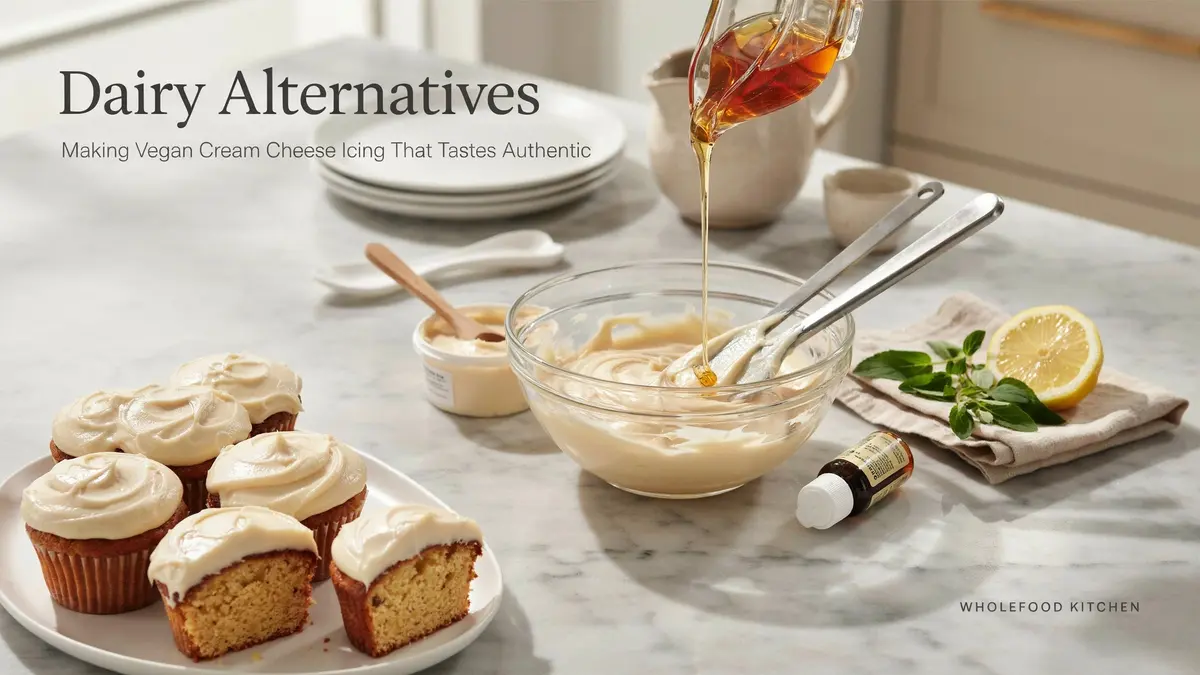
Cream cheese frosting is the signature topping on many Crumbl-style cookies, and for people who avoid dairy it’s often the first thing they miss. The good news is that you can make a vegan version that’s creamy, tangy, and sturdy enough to pipe. The catch is that it doesn’t behave like the dairy original, and a recipe that works with real cream cheese can collapse into soup when you swap in a plant-based one.
In this guide you’ll learn why vegan cream cheese frosting is harder to stabilize, how to choose the right plant-based cream cheese and butter, two tested-style base recipes (a classic and an extra-stable version), how to get an authentic tang, and how to store and troubleshoot it. This article is part of our pillar guide to Gourmet Frostings, Glazes, and Cream Cheese Icing, which covers the vegan and dairy-free alternatives for each frosting family.
💡 Quick take: Use brick-style (block) vegan cream cheese, firm vegan stick butter, and plenty of sifted powdered sugar, mix the cream cheese in last for less than a minute, and chill the finished frosting before piping. If you need more stability, add a little vegetable shortening or a spoonful of starch.
Why Vegan Cream Cheese Frosting Is Harder
Our guide to stabilizing cream cheese icing explains that dairy cream cheese frosting depends on butter for its structure. In a vegan version, both of the main ingredients are different:
- Plant-based cream cheese is usually built on coconut oil, nuts, soy, or starches. Many brands contain more water than dairy cream cheese, and some become runny as soon as they’re beaten.
- Vegan butter varies enormously. Firm stick-style vegan butters behave much like dairy butter, but soft tub margarines contain more water and produce a loose frosting.
- Coconut oil melts at a low temperature. Because many plant-based fats are coconut oil–based, the frosting softens at a cooler temperature than a dairy-based one.
That’s why vegan cream cheese frosting needs more powdered sugar, tighter temperature control, and often a stabilizer, and why it should be kept cold.
Choosing Your Ingredients
Vegan cream cheese
This is the most important choice. Look for brick-style (block) vegan cream cheese, usually sold in a box, which is thicker and holds up much better than the soft, spreadable tub style. Our pillar guide specifically recommends avoiding soft-tub versions because the water content is too high. Brands and formulations vary by country and change over time, so read labels and test a small batch before committing. Commonly used examples include Violife and Kite Hill, among others.
Even brick-style products can release water. If you see liquid in the package, drain it off before measuring.
Vegan butter
Choose firm vegan stick butter, not soft tub margarine. Stick-style products have a higher fat content and less water. Let it soften to cool room temperature (65–68°F / 18–20°C) like regular butter. Different brands taste different, and some have a coconut-forward flavor that you can balance with generous vanilla.
Vegetable shortening (optional)
Vegetable shortening is 100% fat with no water, so a few tablespoons make the frosting noticeably firmer and more heat-tolerant. The tradeoff is flavor: shortening has no taste of its own and can leave a slightly slick mouthfeel. It’s a useful tool for piping and for warm rooms.
Powdered sugar
Use sifted powdered sugar, as we explain in our sifting guide. Vegan frosting often needs more sugar than the dairy version because the plant ingredients contain more water. If you avoid animal products entirely, look for powdered sugar labeled vegan, since some cane sugar is processed using bone char.
Starch (optional)
A spoonful of cornstarch or arrowroot absorbs moisture and firms the frosting. Start with 1 tablespoon and add more only if needed; too much can taste starchy.
Acid and salt
The signature “cream cheese tang” is partly lactic acid, which plant-based versions may or may not replicate. A small amount of lemon juice or apple cider vinegar boosts tang, and salt sharpens it. Add acid by ¼ teaspoon at a time, since it also loosens the frosting.
Recipe 1: Classic Vegan Cream Cheese Frosting (Crumbl-Style Swirl)
This is a butter-forward base, similar in method to the dairy recipe in our stabilizing guide. It makes about 3 cups, enough for 10 large cookies.
Prep time: 15 minutes (plus 20–30 minutes chilling)
Ingredients
- ½ cup (113 g) firm vegan stick butter, cool room temperature
- 8 oz (226 g) brick-style vegan cream cheese, cool, drained of any liquid
- 3½–4 cups (420–480 g) powdered sugar, sifted
- 2 teaspoons vanilla extract
- ½ teaspoon fine salt
- Optional: ¼–½ teaspoon lemon juice for extra tang
Instructions
- Beat the butter. In a stand mixer with the paddle attachment, beat the vegan butter on medium for 1–2 minutes until creamy.
- Add the sugar. Add 3½ cups of the sifted powdered sugar a cup at a time, mixing on low, then medium until smooth. Add the vanilla and salt.
- Add the cream cheese last. Add the cream cheese in chunks and mix on low for 20–30 seconds, just until combined. Don’t overbeat; vegan cream cheese can turn runny quickly.
- Check the texture. If it’s too soft, beat in more powdered sugar a tablespoon at a time. If you want more tang, add lemon juice ¼ teaspoon at a time.
- Chill. Refrigerate 20–30 minutes before piping with a large star tip, and keep it chilled between batches.
Recipe 2: Extra-Stable Vegan Cream Cheese Frosting (Piping and Warm Rooms)
This version uses less cream cheese and adds shortening and starch for structure. It holds a swirl better and tolerates a little more warmth, with a milder tang.
Ingredients
- ¼ cup (56 g) firm vegan stick butter, cool room temperature
- ¼ cup (50 g) vegetable shortening, cool room temperature
- 6 oz (170 g) brick-style vegan cream cheese, cool, drained
- 3½ cups (420 g) powdered sugar, sifted
- 1 tablespoon cornstarch or arrowroot (optional)
- 2 teaspoons vanilla extract
- ½ teaspoon fine salt
- ¼–½ teaspoon lemon juice
Instructions
- Beat the vegan butter and shortening together for 2 minutes until fluffy.
- Mix in the powdered sugar (and cornstarch, if using) a cup at a time. Add the vanilla and salt.
- Add the cream cheese last and mix on low for 20–30 seconds until just combined.
- Taste, then add lemon juice a little at a time for tang.
- Chill 20–30 minutes before piping.
Tip: If it seems too stiff, loosen it with a teaspoon of plant milk rather than more cream cheese.
A Homemade Option
You can also make your own plant-based cream cheese from soaked cashews, lemon juice, and coconut cream. It’s a good option if you can’t find brick-style vegan cream cheese, but it’s softer and contains tree nuts, so test it carefully. Loving It Vegan has a clear recipe for the cream cheese and the frosting (linked below).
Getting an Authentic Tang
Vegan cream cheeses range from mild to quite tart. If yours tastes flat:
- Add lemon juice or apple cider vinegar ¼ teaspoon at a time.
- Make sure you’ve included enough salt.
- Use a good vanilla extract, which rounds out the flavor and softens any coconut or nutty notes.
- Let the frosting rest in the refrigerator for a few hours. Several plant-based recipes note that off flavors fade and the tang develops as it chills.
For spiced or fruity cookies, you can also infuse the vegan butter with spices or zest, as described in our guide to flavor infusion.
Troubleshooting Vegan Cream Cheese Frosting
| Problem | Likely cause | Fix |
|---|---|---|
| Frosting is runny | Tub-style cream cheese, warm ingredients, or overbeaten | Chill 20–30 minutes; add sifted powdered sugar a tablespoon at a time |
| Frosting won’t hold a swirl | Too much cream cheese or soft vegan butter | Use Recipe 2, add shortening or starch, chill |
| Frosting is watery or weeps | Liquid in the cream cheese package, or too much acid | Drain the cream cheese; reduce lemon juice |
| Frosting is grainy | Unsifted sugar or cold butter | Sift sugar; soften butter; see our guide to grainy frostings |
| Frosting is greasy or oily | Ingredients too warm | Refrigerate 15–20 minutes and re-beat on low |
| Tastes strongly of coconut | Coconut-based butter or cream cheese | Switch brands; add more vanilla, salt, and a little lemon |
| Not tangy enough | Mild cream cheese | Add lemon juice ¼ teaspoon at a time; rest in the refrigerator |
| Too sweet | Large amount of sugar | Add salt and lemon juice; use Recipe 2 with less sugar and more shortening |
Storing Vegan Cream Cheese Frosting and Frosted Cookies
- Refrigerate. Many plant-based fats soften at room temperature, so keep frosted cookies in the refrigerator, and let them sit out for 15–20 minutes before serving. As a rule, don’t leave them out for more than about 2 hours.
- Frosting: Store in an airtight container for about 4 days. Re-whip briefly on low before using.
- Freezing: Some recipes say you can freeze vegan frosting for a month or more, but results depend on the brands used. If you want to try, freeze a small portion first and test it.
- Shortening version: Holds up better at room temperature than the classic version, but still treat it as a perishable.
Allergen and Dietary Notes
Dairy-free doesn’t mean allergen-free. Plant-based cream cheeses and butters may contain soy, coconut, almonds, cashews, or other tree nuts. Check labels, and let guests know what’s inside. Also check that the cookie itself is vegan: many Crumbl-style cookie doughs contain butter and eggs, so you’ll need a dairy-free and egg-free base to match your frosting.
Best Cookie Pairings
Vegan cream cheese frosting pairs with the same cookies as the dairy version — carrot cake cookies, pumpkin spice cookies, snickerdoodles, and red velvet or chocolate cookies — as long as the cookie dough is also vegan.
Expert Resources on Vegan Cream Cheese Frosting
- Love and Lemons — Vegan Cream Cheese Frosting — A four-ingredient version with advice on brick-style cream cheese and adjusting thickness.
- Keeping the Peas — Vegan Cream Cheese Frosting — Tips on using room-temperature vegan butter and draining the cream cheese.
- Namely Marly — Vegan Cream Cheese Frosting — A shortening-stabilized version that keeps its shape when piped.
- Loving It Vegan — Vegan Cream Cheese Frosting — Includes a homemade cashew cream cheese option.
Frequently Asked Questions
Why is my vegan cream cheese frosting so runny?
Usually the vegan cream cheese or butter has too much water, the ingredients were too warm, or it was overbeaten. Use brick-style cream cheese and stick butter, drain any liquid, mix the cream cheese in last, and chill before piping.
What is the best vegan cream cheese for frosting?
A firm, brick-style product. Soft, spreadable tub versions are too wet. Brands and recipes vary by region and over time, so test a small batch.
Can I pipe vegan cream cheese frosting?
Yes, if you chill it and use a stable formula. The extra-stable recipe with shortening or starch is better for detailed piping.
How do I make vegan cream cheese frosting tangy?
Add lemon juice or apple cider vinegar a quarter teaspoon at a time, include salt, and let the frosting rest in the refrigerator for a few hours.
Can vegan cream cheese frosting sit out at room temperature?
It’s best kept refrigerated because many plant-based fats soften easily. Limit time at room temperature to about 2 hours.
Does vegan cream cheese frosting taste like coconut?
It can if your butter or cream cheese is coconut-based. Choose different brands, or balance with extra vanilla, salt, and lemon juice.
Is the frosting nut-free or soy-free?
Not necessarily. Many vegan cream cheeses and butters contain nuts, soy, or coconut. Check labels if you’re baking for someone with allergies.
About the Author
Emily Chen is a Senior Recipe Developer and Pastry Specialist at Cookie Insights. With over eight years of professional experience in test kitchens focusing on ingredient emulsion and home-baking science, she specializes in troubleshooting tricky plant-based alternatives, gluten-free variations, and classic gourmet frostings. You can often find her experimenting with temperature controls to get the sturdiest vegan swirls and dairy-free textures. For questions, recipe suggestions, or collaboration inquiries, readers can reach out to her via email at emily@crumblstylecookies.com or connect with her through the Cookie Insights
community page.
Continue Exploring Gourmet Frostings
Head back to the Gourmet Frostings, Glazes, and Cream Cheese Icing pillar guide, learn the dairy version in our stabilizing cream cheese icing guide, or compare frosting styles in our Swiss meringue vs. American buttercream guide.
Leave a Reply